
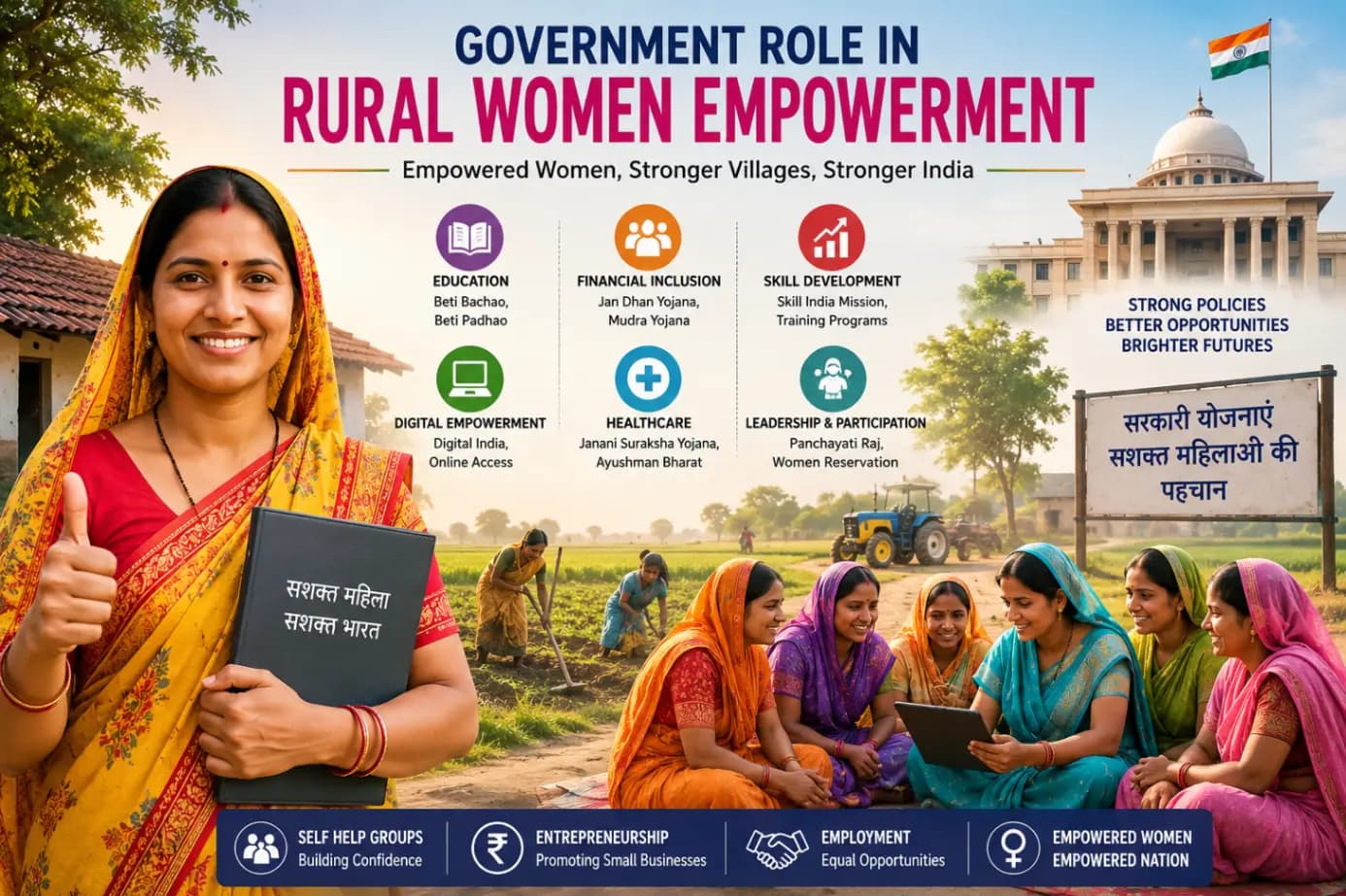
Government Role in Rural Women Empowerment
Introduction
Women are the backbone of rural India, contributing significantly to agriculture, household management, and community development. Despite their crucial role, rural women have historically faced challenges such as limited access to education, healthcare, employment opportunities, and financial resources. Recognizing these issues, the Government of India has implemented various policies, programs, and welfare schemes aimed at empowering rural women and promoting gender equality. These initiatives focus on education, economic independence, health, skill development, and political participation, enabling rural women to become active contributors to national development.
Importance of Rural Women Empowerment
Empowering rural women is essential for achieving sustainable development and inclusive growth. When women are educated, financially independent, and socially empowered, they contribute to improved family welfare, better healthcare outcomes, increased productivity, and stronger local economies. Women's empowerment also helps reduce poverty and promotes social justice in rural communities.
Government Initiatives for Rural Women Empowerment
1. National Rural Livelihood Mission (NRLM)
The National Rural Livelihood Mission aims to reduce poverty by organizing rural women into Self-Help Groups (SHGs). These groups encourage savings, provide access to credit, and support women in establishing small businesses and income-generating activities.
Key Benefits:
- Financial inclusion
- Entrepreneurship opportunities
- Access to low-interest loans
- Community support networks
2. Beti Bachao, Beti Padhao (Save the Daughter, Educate the Daughter)
Launched to address gender discrimination and improve the status of girls, this initiative promotes female education and awareness regarding the importance of girls in society.
Key Benefits:
- Increased enrollment of girls in schools
- Awareness about gender equality
- Reduction in gender-based discrimination
3. Pradhan Mantri Mudra Yojana (PMMY)
This scheme provides collateral-free loans to small entrepreneurs, including rural women, to start or expand businesses.
Key Benefits:
- Easy access to business loans
- Encouragement for women entrepreneurs
- Promotion of self-employment
4. Skill India Mission
The Skill India Mission offers vocational training programs that help women acquire industry-relevant skills and improve their employability.
Key Benefits:
- Skill development
- Employment opportunities
- Enhanced earning potential
5. Digital India Initiative
Digital India aims to bridge the digital divide by providing internet access and promoting digital literacy among rural populations, including women.
Key Benefits:
- Access to online education
- Digital banking services
- E-commerce opportunities
- Better access to government services
6. Sukanya Samriddhi Yojana
This savings scheme encourages parents to secure the future of their daughters by investing in their education and marriage expenses.
Key Benefits:
- Financial security for girls
- Promotion of education
- Long-term savings benefits
7. Pradhan Mantri Ujjwala Yojana
The scheme provides free LPG connections to women from economically weaker households, reducing dependence on traditional cooking fuels.
Key Benefits:
- Improved health and safety
- Reduced indoor air pollution
- Time-saving for women
8. Mahatma Gandhi National Rural Employment Guarantee Act (MGNREGA)
MGNREGA guarantees wage employment to rural households and ensures equal wages for men and women.
Key Benefits:
- Employment opportunities
- Financial independence
- Improved living standards
Role of Government in Education and Healthcare
The government has expanded access to education through scholarships, free textbooks, mid-day meal programs, and infrastructure development in rural schools. Healthcare initiatives such as maternal health programs, immunization campaigns, and rural health centers have significantly improved women's health outcomes.
Major Healthcare Programs:
- Janani Suraksha Yojana
- Ayushman Bharat
- Poshan Abhiyaan
- Mission Indradhanush
These programs help improve maternal and child health while ensuring better nutrition and healthcare access.
Political Empowerment of Rural Women
The reservation of seats for women in Panchayati Raj Institutions has increased their participation in local governance. Women now actively contribute to decision-making processes related to education, sanitation, healthcare, and community development.
Benefits of Political Participation:
- Greater representation of women's issues
- Improved governance
- Increased leadership opportunities
- Community development initiatives
Challenges in Implementation
Despite numerous initiatives, several challenges remain:
- Lack of awareness about government schemes
- Limited access to banking and financial services
- Social and cultural barriers
- Low digital literacy levels
- Inadequate infrastructure in remote areas
Addressing these challenges requires effective implementation, awareness campaigns, and community participation.
Conclusion
The Government of India has played a significant role in empowering rural women through various welfare programs, financial initiatives, educational opportunities, and healthcare schemes. These efforts have improved the social and economic status of millions of women across rural India. However, continued investment in education, digital literacy, entrepreneurship, and social awareness is necessary to ensure that every rural woman can achieve her full potential. Empowering rural women is not only a matter of equality but also a crucial step toward building a stronger, more prosperous, and inclusive India.