
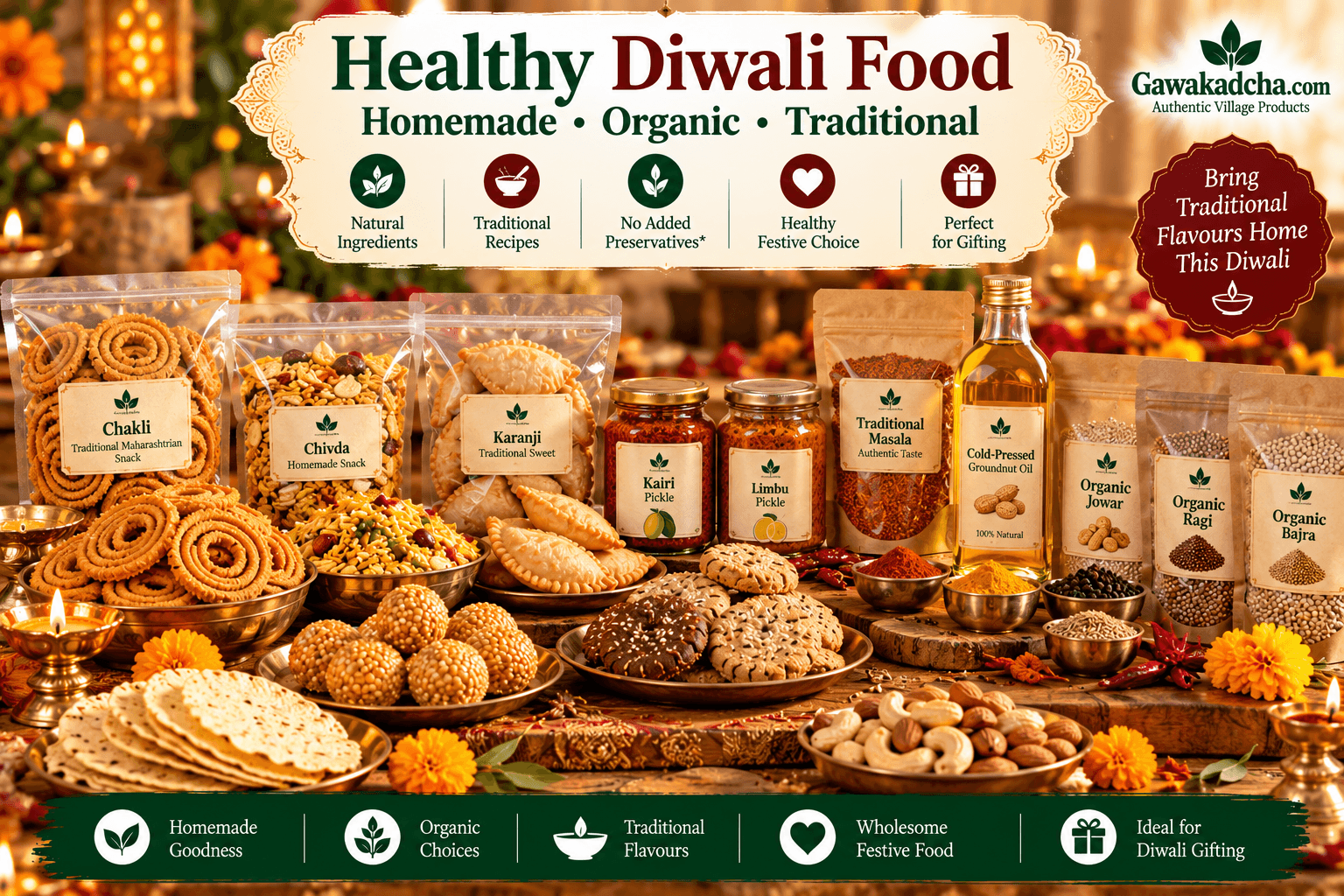
Healthy Diwali Food Guide: Choose Homemade, Organic & Traditional Foods
Homemade Goodness • Organic Choices • Traditional Flavours • Mindful Festive Eating
Diwali is a celebration of lights, family, traditions and, of course, delicious food.
From crispy chakli and savoury chivda to traditional sweets, homemade pickles, masalas and festive meals, food is at the heart of almost every Diwali gathering.
But with so many options available today, choosing what to put on your festive table can sometimes be difficult.
Should you choose homemade food or packaged snacks?
Are organic ingredients worth considering?
How can you enjoy traditional Diwali foods without overdoing it?
And what should you look for when buying healthy Diwali food online?
The answer is not about completely avoiding your favourite festive foods.
Instead, it is about making more informed food choices.
Choosing products with clear ingredients, traditional recipes, appropriate portions and reliable sourcing can make your Diwali celebrations more thoughtful while keeping the focus on taste, tradition and togetherness.
Let's explore a practical guide to choosing homemade, organic and traditional foods for Diwali.
Why Food Is an Important Part of Diwali
Diwali is much more than a festival of lights.
It is a time when families meet, homes are decorated, guests arrive and traditional recipes return to the kitchen.
Food plays an important role in these celebrations.
Popular Diwali foods can include:
Chakli
Chivda
Karanji
Shankarpali
Ladoo
Papad
Pickles
Traditional masalas
Homemade snacks
Regional sweets
Millet-based snacks
Dry fruits and nuts
Many of these foods are connected with memories and family traditions.
That is why choosing traditional Diwali food is not simply about eating something delicious. It can also be a way of keeping regional food culture alive.
What Does "Healthy Diwali Food" Really Mean?
The term healthy Diwali food can mean different things to different people.
There is no single food that automatically makes a festive diet healthy.
Instead, a thoughtful approach involves looking at:
Ingredients
Preparation
Portion size
Variety
Sweeteners
Oils and fats
Freshness
Food safety
Storage
Individual dietary needs
For example, a homemade snack may have a traditional recipe but still contain significant amounts of sugar or fat.
Similarly, a product labelled "organic" is not automatically low-calorie.
Therefore, the best approach is mindful selection rather than unrealistic perfection.
You can enjoy Diwali food while still paying attention to what you are eating.
1. Choose Homemade Diwali Food When You Want Traditional Flavours
Homemade food has a special place in Indian festivals.
Traditional recipes are often prepared using familiar ingredients and regional cooking methods.
Homemade Diwali snacks may include:
Chakli
Chivda
Shankarpali
Karanji
Traditional ladoos
Papad
Homemade masalas
Pickles
The biggest attraction is often the flavour.
A traditional recipe can taste very different from a highly standardised commercial product.
However, remember that homemade does not automatically mean healthier or safer.
Good hygiene, proper preparation, storage and packaging remain important.
2. Look for Clear Ingredient Information
One of the simplest ways to make better food choices is to understand what you are buying.
When purchasing Diwali food online, check the ingredient list for information about:
Flour or grains
Oils
Sugar
Jaggery
Spices
Nuts
Dairy ingredients
Preservatives
Allergens
A clear product description helps you compare different products before ordering.
Instead of choosing food based only on attractive packaging, take a moment to understand the ingredients.
3. Consider Organic Food for Diwali
Organic food has become increasingly popular among consumers who want to pay closer attention to agricultural sourcing and production practices.
Depending on the product and certification, organic farming follows specific standards regarding production and permitted inputs.
Organic options may include:
Organic pulses
Organic grains
Organic millets
Organic spices
Organic flours
Other certified organic food products
If you specifically want organic food for Diwali, check the product's certification and labelling rather than relying only on words such as "natural" or "traditional."
4. Don't Confuse Organic, Natural and Homemade
This is particularly important when shopping online.
The following terms do not necessarily mean the same thing:
Homemade
Organic
Natural
Traditional
Preservative-Free
For example:
A homemade product is not automatically certified organic.
An organic product is not necessarily homemade.
A traditional product may not be preservative-free.
A preservative-free product does not automatically mean it is nutritionally superior.
Always look at the actual product information.
This helps you make an informed decision rather than relying only on marketing language.
5. Choose Traditional Grains for More Variety
Diwali is an excellent opportunity to explore traditional Indian grains.
Instead of relying only on refined grain-based foods, you can explore products made using:
Jowar
Ragi
Bajra
Other millets
Unpolished pulses
Traditional grains
These ingredients have been part of Indian food traditions for generations.
Today, they are available in modern formats such as:
Millet cookies
Millet snacks
Flour products
Ready-to-make mixes
Traditional recipes
This allows traditional ingredients to fit into modern lifestyles.
6. Try Millet Cookies for Diwali Tea Time
If you are looking for a different healthy Diwali snack option, millet cookies can be worth exploring.
Popular varieties include:
Ragi Cookies
Made using finger millet as a key ingredient.
Jowar Cookies
Made using jowar, commonly known as sorghum.
Multi-Millet Cookies
Made using a combination of millet varieties.
These cookies can be served with:
Tea
Coffee
Milk
Other beverages
However, remember that millet cookies are still cookies.
Check the complete ingredient list, sweetener, fat content and serving size rather than assuming that every millet cookie is automatically healthy.
7. Choose Jowar, Ragi and Bajra in Traditional or Modern Forms
Millets are not only for cookies.
They can be enjoyed in several forms.
Jowar
Traditionally used for bhakri and other regional foods.
Ragi
Used in bhakri, dosa, porridge, malt and modern snacks.
Bajra
Commonly used in traditional rotis and bhakri.
During Diwali, incorporating these grains through suitable foods can add variety to the festive menu.
8. Pay Attention to Sweeteners
Diwali is naturally associated with sweets.
Sugar, jaggery and other sweeteners can be found in many festive foods.
If you are trying to make more mindful choices, don't assume that replacing sugar with jaggery automatically makes a product healthy.
Jaggery Is Still a Source of Sugar.
Instead, look at:
Total sugar
Serving size
Ingredients
Overall portion
Frequency of consumption
The goal is not to eliminate festive sweets.
The goal is to enjoy them thoughtfully.
9. Choose Traditional Masalas for Authentic Festive Cooking
Spices are central to Indian cooking.
A good traditional masala can bring depth and regional character to festive meals.
Depending on the cuisine, you may explore:
Kanda Lasoon Masala
Kala Masala
Garam Masala
Kitchen King Masala
Mutton Masala
Other regional spice blends
When buying masalas, check:
Ingredient list
Net quantity
Packaging
Shelf life
Storage instructions
Manufacturer or seller information
Traditional masalas can make festive cooking easier while helping you recreate familiar regional flavours.
10. Add Homemade Pickles to the Festive Table
Pickles are another important part of Indian food culture.
A small serving of pickle can add a strong combination of:
Spice + Sourness + Aroma + Traditional Flavour
Popular varieties include:
Kairi pickle
Limbu pickle
Mirchi pickle
When buying homemade pickles online, check the ingredients, oil used, shelf life, packaging and storage instructions.
Since pickles can vary significantly in salt, oil and spice content, portion size is also worth considering.
11. Choose Cold-Pressed Oils Carefully
Oil is another important ingredient in festive cooking.
Traditional Indian cooking uses several types of edible oils, including:
Groundnut oil
Sunflower oil
Safflower oil
Coconut oil
Cold-pressed oils are produced through mechanical pressing methods and are available in different varieties.
If you are choosing cold-pressed oil for Diwali cooking, consider:
Type of oil
Intended cooking use
Processing method
Packaging
Shelf life
Storage instructions
No single oil is automatically the best choice for every cooking method or individual.
Choose according to your cooking needs and dietary preferences.
12. Choose Unpolished Pulses and Traditional Grains
Festive food doesn't have to consist only of snacks and sweets.
Diwali meals can also include traditional staples such as:
Toor dal
Moong dal
Bajra
Jowar
Other grains and pulses
When selecting pulses, you can compare products based on:
Processing
Ingredient quality
Packaging
Origin
Certification where applicable
Product information
Traditional grains and pulses can add variety to everyday meals during the festive season.
13. Don't Ignore Portion Size
This is perhaps one of the most practical tips for enjoying Diwali food.
You don't need to completely avoid sweets, chakli, chivda or cookies.
Instead, consider portion size.
For example:
A small serving of your favourite snack + a balanced meal + plenty of water
can be a more practical approach than completely restricting festive foods.
Diwali comes only once a year.
Enjoy the food—but enjoy it mindfully.
14. Build a Balanced Diwali Food Plate
A festive meal can include a variety of foods.
For example:
Traditional Main Dish
Choose a familiar regional preparation.
Dal or Pulse
Add a suitable pulse-based dish.
Vegetable Preparation
Include seasonal vegetables where appropriate.
Traditional Snack
Enjoy a small serving of your favourite Diwali snack.
Pickle
Add a small portion for flavour.
Sweet
Enjoy a modest serving of your favourite festive sweet.
This approach allows you to celebrate without making every meal entirely snack-based.
15. Choose Fresh Food and Check Shelf Life
Freshness matters, especially when buying food for festivals.
Before ordering, check:
Manufacturing or preparation date
Best-before date
Shelf life
Storage conditions
Packaging condition
This is particularly important for homemade and small-batch products.
If a product has a shorter shelf life, order an appropriate quantity instead of buying more than you can consume within the recommended period.
16. Packaging Matters When Buying Food Online
Good packaging protects food during transportation.
This is especially important for:
Pickles
Cookies
Snacks
Masalas
Oils
Pulses
Traditional food products
Before purchasing, check whether the product description provides information about packaging.
Customer reviews can also provide useful insights into how products arrive.
17. Read Customer Reviews Before Buying
Reviews can help answer practical questions that a product description may not fully cover.
Look for comments about:
Taste
Freshness
Texture
Quantity
Packaging
Delivery
Overall experience
However, reviews are individual experiences.
Use them as one source of information rather than the only basis for your decision.
18. Support Small Food Producers and Rural Entrepreneurs
Diwali is also an opportunity to discover food products made by:
Home-based producers
Rural women entrepreneurs
Self-help groups
Small food businesses
Local producers
Traditional food makers
Many small producers specialise in products such as:
Pickles
Papad
Masalas
Cookies
Snacks
Traditional flours
Regional foods
Choosing such products can help create demand for traditional recipes and small-scale food businesses.
19. Give Traditional Food as a Diwali Gift
Diwali gifting doesn't have to mean buying the same standard gift every year.
A traditional food hamper can include:
Homemade snacks
Millet cookies
Traditional masalas
Pickles
Organic grains
Cold-pressed oils
Other regional food products
Such a hamper can combine taste, tradition and usefulness.
Before gifting food, check the recipient's dietary preferences and allergies.
20. How to Choose Healthy Diwali Food Online
If you're shopping online, use this simple checklist:
Step 1: Read the Ingredients
Know what you are buying.
Step 2: Check the Quantity
Compare pack sizes before ordering.
Step 3: Check Shelf Life
Make sure the product will remain suitable for your planned consumption.
Step 4: Check Storage Instructions
Some products require specific storage conditions.
Step 5: Check Certification
For organic products, look for appropriate certification or credible labelling.
Step 6: Check Allergens
Especially important for people with food allergies.
Step 7: Read Reviews
Look for practical customer feedback.
Step 8: Order From a Reliable Marketplace
Choose a platform that provides clear product and seller information.
Healthy Diwali Food Does Not Mean a Boring Diwali
One of the biggest misconceptions about healthy eating during festivals is that you have to give up everything you enjoy.
You don't.
Diwali food is part of the celebration.
You can enjoy:
Chakli
Chivda
Ladoo
Karanji
Pickles
Masalas
Cookies
Traditional Meals
The key is balance.
Choose quality products where possible, understand the ingredients and enjoy reasonable portions.
Homemade Food vs Packaged Food: What Should You Choose?
There is no simple answer.
A well-prepared packaged product from a reliable manufacturer can be a good option.
A homemade product can also be excellent.
The important factors are:
Factor | What to Check |
|---|---|
Ingredients | Are they clearly listed? |
Hygiene | Is the product prepared and handled properly? |
Freshness | Is the shelf life suitable? |
Packaging | Is it protected during storage and delivery? |
Nutrition | What does the nutrition information show? |
Allergens | Are relevant allergens disclosed? |
Certification | Is organic certification claimed appropriately? |
Seller | Is product information transparent? |
Choose based on the actual product, not simply whether it is homemade or packaged.
Why Traditional Food Still Matters in Modern Diwali Celebrations
Modern lifestyles are changing rapidly.
People are working longer hours, ordering food online and looking for convenience.
But festivals continue to bring traditional food back to the table.
This is why products such as:
Homemade pickles
Traditional masalas
Millet foods
Homemade snacks
Regional sweets
Traditional grains
continue to have a place in modern homes.
They connect today's consumers with flavours that have been enjoyed across generations.
Why Gawakadcha.com Is Useful for Traditional Diwali Food
Gawakadcha.com brings traditional and regional Indian products together in an online marketplace.
For customers preparing for Diwali, this makes it easier to discover categories such as:
Traditional Snacks
Homemade Pickles
Maharashtrian Masalas
Millet Cookies
Organic Grains
Unpolished Pulses
Cold-Pressed Oils
Traditional Foods
Village Products
The idea is to make traditional Indian products easier for modern customers to discover and order online.
A Simple Healthy Diwali Food Checklist
Before you buy your festive food, ask:
☑ What are the ingredients?
☑ How much should I consume?
☑ What is the shelf life?
☑ How should it be stored?
☑ Is the product appropriately labelled?
☑ Does it contain allergens I need to avoid?
☑ If it is organic, is the claim supported by appropriate certification?
☑ Does the packaging protect the product?
☑ Is the seller information clear?
These simple questions can make your festive shopping much more informed.
Frequently Asked Questions
What is healthy food for Diwali?
Healthy Diwali food is best understood as a balanced selection of festive foods made with clearly understood ingredients and enjoyed in sensible portions. Traditional snacks, homemade foods, millet products and suitable meals can all be part of a balanced festive menu.
Are homemade Diwali snacks healthier?
Not automatically. Homemade snacks may offer traditional recipes and ingredient transparency, but their nutritional profile still depends on the ingredients, preparation method and portion size.
Is organic food better for Diwali?
Certified organic products can be a good choice for consumers who prefer organic production standards. However, organic does not automatically mean low-calorie or nutritionally superior.
What are some healthy Diwali snacks?
Options can include traditional snacks, millet-based cookies, nuts, suitable homemade foods and other products selected according to individual dietary needs.
Are millet cookies healthy?
Millet cookies can be a convenient way to include traditional grains, but they are still cookies. Check the ingredients, sweeteners, fats and serving size.
Is jaggery healthier than sugar in Diwali sweets?
Jaggery and sugar are both sources of sugar. Jaggery does not make a sweet automatically suitable for unlimited consumption.
How can I buy healthy Diwali food online?
Check ingredients, nutrition information, shelf life, packaging, storage instructions, allergens, certification where applicable and customer reviews before ordering.
What traditional foods can I buy for Diwali?
Depending on availability, you can explore traditional snacks, homemade pickles, masalas, millet cookies, organic grains, pulses, cold-pressed oils and other regional Indian food products.
Where can I buy traditional Diwali food online?
You can explore homemade, traditional and regional food products on Gawakadcha.com, subject to product availability and delivery coverage.
Conclusion
Diwali is a time to celebrate—and food is an important part of that celebration.
Choosing homemade, organic and traditional foods can make your festive food shopping more thoughtful, but the goal is not to label every traditional food as "healthy."
Instead, focus on what really matters:
Clear Ingredients
Good Food Handling
Freshness
Appropriate Portions
Reliable Product Information
Traditional Flavours
Balanced Choices
Explore the richness of Indian food culture through homemade snacks, traditional Maharashtrian foods, millet products, organic grains, homemade pickles, traditional masalas and cold-pressed oils.
And most importantly, enjoy your favourite Diwali foods without guilt—just with a little more awareness.
Because a memorable Diwali is not about eating perfectly.
It is about celebrating family, tradition, flavour and togetherness.
Choose Thoughtfully. Eat Mindfully. Celebrate Traditionally.
This Diwali, bring the authentic taste of Indian traditions to your festive table with traditional and homemade food products from Gawakadcha.com.
Homemade Goodness • Traditional Flavours • Thoughtful Choices • Diwali Togetherness