
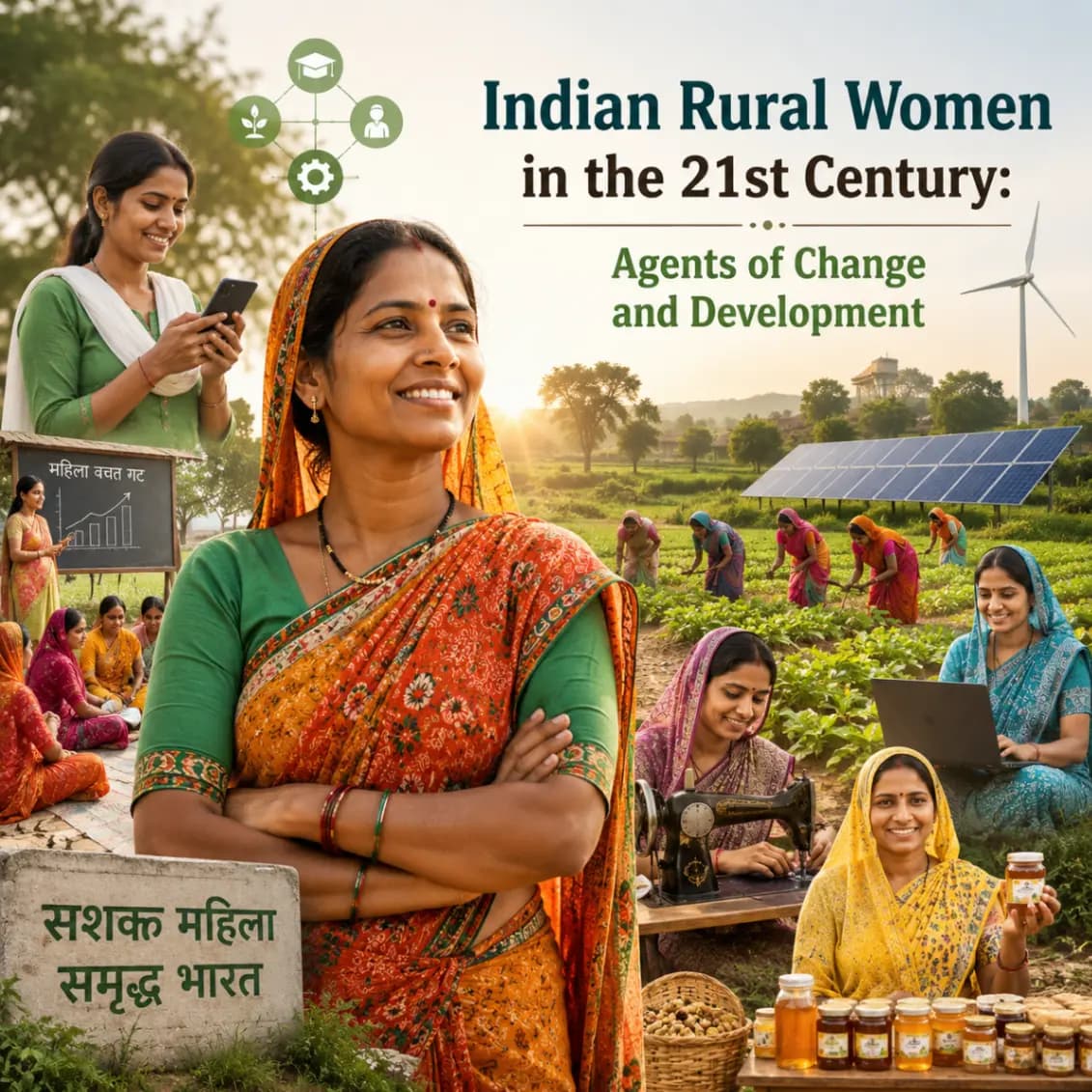
Indian Rural Women in the 21st Century: Agents of Change and Development
Introduction
Women have always played a vital role in the social and economic development of India. In rural areas, women contribute significantly to agriculture, livestock management, household responsibilities, and community welfare. However, the 21st century has brought remarkable changes to the lives of rural women. Increased access to education, technology, government welfare schemes, and economic opportunities has empowered them to step beyond traditional roles and become active contributors to the nation’s progress.
Today, rural women are not only managing households but are also emerging as entrepreneurs, farmers, community leaders, and change-makers.
The Traditional Role of Rural Women
Historically, rural women were primarily responsible for household chores, childcare, and assisting in agricultural activities. Despite their immense contribution, their work often went unrecognized and undervalued. Limited access to education, healthcare, and financial resources restricted their opportunities for personal and professional growth.
Social norms and gender biases further limited their participation in decision-making processes within families and communities.
Education: A Powerful Tool for Empowerment
One of the most significant developments in the 21st century has been the increased access to education for girls and women in rural India. Government initiatives, awareness campaigns, and changing societal attitudes have encouraged families to prioritize female education.
Education has empowered rural women with knowledge, confidence, and awareness of their rights. It has enabled them to pursue careers in teaching, healthcare, administration, and various professional fields. Educated women are also better equipped to make informed decisions regarding health, finances, and family welfare.
Economic Empowerment and Entrepreneurship
Economic independence is transforming the lives of rural women. Self-Help Groups (SHGs), microfinance programs, and government-supported entrepreneurship initiatives have provided women with opportunities to start small businesses and generate income.
Many rural women are engaged in:
- Food processing and packaging
- Handicrafts and traditional art
- Dairy farming and livestock management
- Organic farming
- Textile and garment production
- Rural tourism and hospitality services
With the rise of e-commerce and digital marketplaces, women can now reach customers beyond their villages and even across the country. This has opened new avenues for financial growth and self-reliance.
The Digital Revolution and Rural Women
Technology has become a powerful force in empowering rural women. Smartphones, internet access, and digital literacy programs have enabled women to access information, online education, banking services, and government schemes.
Digital platforms have helped women:
- Learn new skills through online courses
- Manage businesses through social media marketing
- Access digital payment systems
- Participate in online communities and networks
- Stay informed about agricultural and market trends
The digital revolution is bridging the gap between rural and urban opportunities, allowing women to participate more actively in the modern economy.
Political and Social Participation
The introduction of reservations for women in local governance has significantly increased their participation in politics. Today, many women serve as members and leaders of village councils, local bodies, and community organizations.
Their involvement has contributed to improvements in:
- Education and literacy programs
- Public health initiatives
- Water and sanitation management
- Women's welfare and safety
- Community development projects
Rural women are increasingly becoming influential voices in shaping local policies and addressing social issues.
Challenges That Still Remain
Despite considerable progress, rural women continue to face several challenges:
1. Gender Discrimination
Traditional beliefs and social norms often limit opportunities for women.
2. Limited Access to Quality Education
Educational facilities in many rural areas remain inadequate.
3. Healthcare Issues
Access to quality healthcare services is still a challenge in remote regions.
4. Financial Constraints
Many women lack access to formal banking services, credit, and financial resources.
5. Digital Divide
While technology adoption is increasing, digital literacy remains limited among many rural women.
6. Safety and Mobility Concerns
Concerns related to safety and transportation can restrict women's participation in education and employment.
Government Initiatives Supporting Rural Women
Several government programs have contributed to the empowerment of rural women, including:
- National Rural Livelihood Mission (NRLM)
- Beti Bachao, Beti Padhao
- Pradhan Mantri Mudra Yojana
- Digital India Initiative
- Sukanya Samriddhi Yojana
- Skill India Mission
These initiatives aim to improve education, employment, financial inclusion, and overall quality of life for women in rural communities.
The Road Ahead
The future of rural India depends significantly on the empowerment of its women. Continued investment in education, healthcare, digital literacy, entrepreneurship, and gender equality is essential for sustainable development.
By providing equal opportunities and eliminating barriers, rural women can become even stronger contributors to economic growth, social progress, and
community development.
Conclusion
The 21st century has witnessed a transformative journey for Indian rural women. From being confined to traditional roles to becoming entrepreneurs, leaders, and innovators, they have emerged as powerful agents of change. While challenges remain, the progress achieved so far highlights the resilience, determination, and potential of rural women.
Empowering rural women is not merely a matter of social justice—it is a necessity for building a stronger, more inclusive, and prosperous India.