
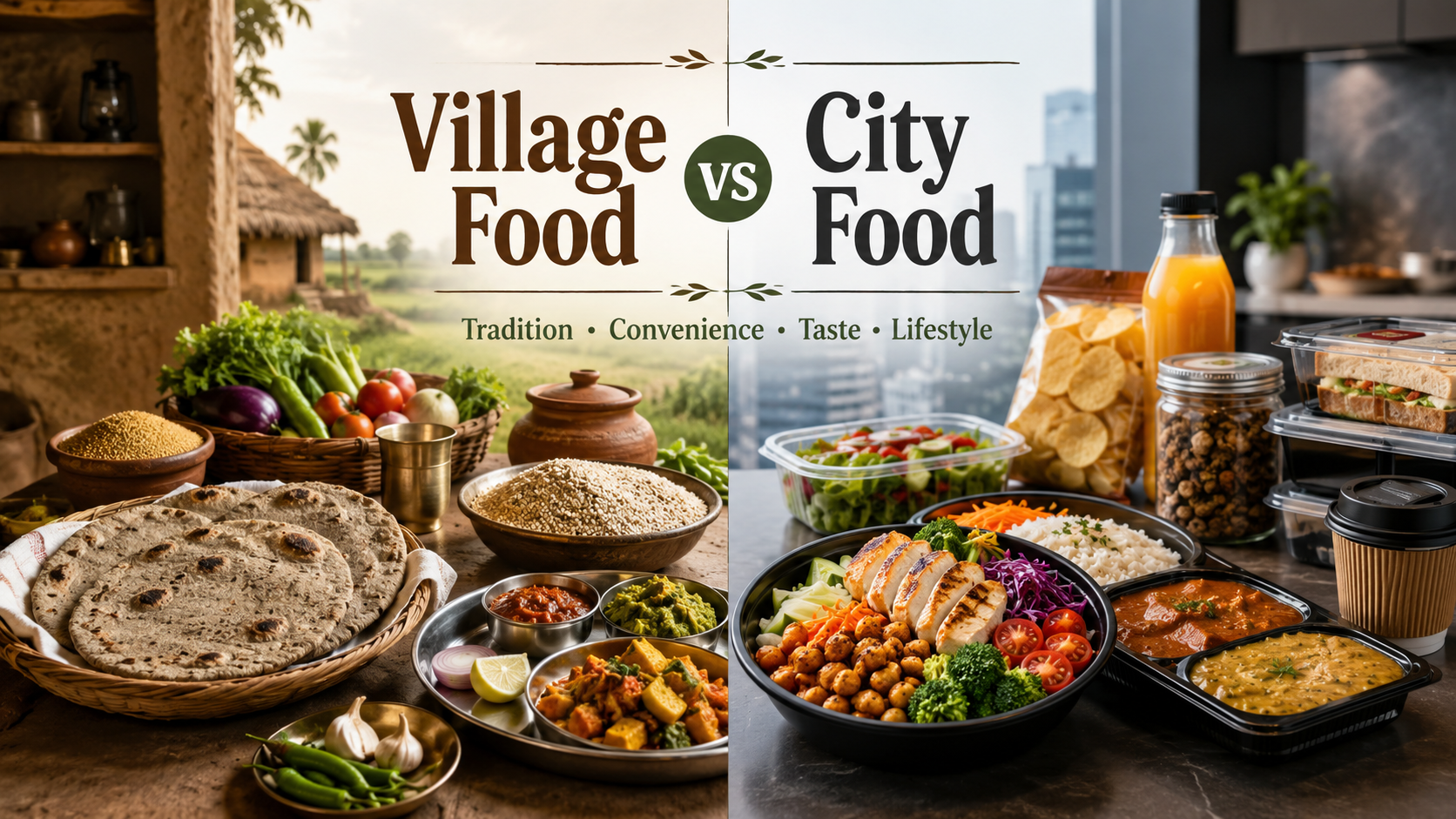
Village Food vs City Food: What’s the Difference?
Food reflects the place where people live, the ingredients available around them and the lifestyle they follow. In India, the difference between village food and city food is particularly interesting because rural and urban kitchens often operate in very different environments.
Village food is usually associated with fresh local ingredients, seasonal produce, traditional cooking methods and recipes passed down through generations. City food, meanwhile, represents convenience, variety, global influence, restaurants, food-delivery apps, supermarkets and packaged products designed for fast-moving lifestyles.
However, the comparison is not as simple as saying that all village food is healthy and all city food is unhealthy. Rural meals may sometimes contain excessive oil, salt or carbohydrates, while urban households can prepare highly nutritious, balanced home-cooked meals.
The real difference lies in ingredient sourcing, processing, preparation, convenience, food culture and the relationship people have with what they eat.
This guide explores village food vs city food, including their ingredients, nutritional value, taste, cost, lifestyle impact and cultural importance.
What Is Village Food?
Village food refers to meals and food products prepared using ingredients, recipes and techniques traditionally associated with rural communities.
It is often based on what is grown or produced locally. Depending on the region, village meals may include:
Jowar, bajra, ragi and other millets
Rice or wheat
Locally grown pulses
Seasonal vegetables
Fresh dairy products
Groundnuts and sesame
Homemade pickles
Dry chutneys
Traditional masalas
Papad and sun-dried foods
Cold-pressed oils
Jaggery
Fermented foods
Regional snacks
In Maharashtra, a traditional village meal may include jowar bhakri, Pithla, Zunka, Bharli Vangi, Thecha, Shenga Chutney, dal, rice, pickle and buttermilk.
Village food changes across India. Coastal communities may use coconut, rice and seafood, while dryland regions may depend more on millets, pulses, oilseeds and preserved foods.
The main feature of authentic village food is its connection with local agriculture and regional food knowledge.
What Is City Food?
City food is a broad term covering the meals, snacks and eating habits commonly found in urban areas.
It can include:
Home-cooked meals
Restaurant food
Street food
Office-canteen meals
Ready-to-eat products
Packaged snacks
Frozen food
Bakery products
Fast food
International cuisine
Food-delivery meals
Health-focused products
Supermarket groceries
City food is influenced by busy schedules, smaller households, long commutes, greater purchasing power and easy access to multiple cuisines.
A city resident may eat traditional poha for breakfast, order Chinese food for lunch, drink café coffee in the evening and prepare millet khichdi for dinner.
Therefore, urban food culture is generally more diverse but also more dependent on convenience and commercial food systems.
Village Food vs City Food: Quick Comparison
Factor | Village Food | City Food |
|---|---|---|
Ingredient source | Frequently local and seasonal | Local, national or imported |
Processing | Often minimal or household-level | May range from fresh to highly processed |
Cooking style | Traditional and slow | Traditional, modern or convenience-based |
Variety | Strong regional variety | Wide national and international variety |
Freshness | Often linked to nearby farms | Depends on storage and supply chains |
Convenience | May require more preparation | Many quick and ready-to-eat choices |
Packaging | Usually limited in local consumption | Widely used |
Taste | Regional and ingredient-focused | Highly diverse and standardised |
Cost | Can be affordable when ingredients are local | Varies from budget meals to premium dining |
Cultural connection | Generally strong | May be mixed or less visible |
Availability | Seasonal and region-dependent | Broad year-round availability |
Food knowledge | Often passed through generations | Often learned through media, labels and trends |
1. Difference in Ingredient Sourcing
One of the biggest differences between rural food and urban food is where the ingredients come from.
Village Food Ingredients
Rural households may obtain food from:
Their own farms
Kitchen gardens
Local farmers
Weekly markets
Nearby dairy producers
Community mills
Local oil extraction units
The distance between the producer and consumer may be relatively short.
A family may know who grew the jowar, produced the milk or prepared the masala. This connection creates greater familiarity with the food’s origin.
City Food Ingredients
Urban households generally depend on:
Supermarkets
Grocery shops
Online grocery platforms
Restaurants
Food-delivery apps
Packaged food brands
Wholesale supply chains
City food may travel through several stages before reaching the customer.
However, urban consumers now also have access to farmers’ markets, organic stores, direct-to-consumer brands and online rural marketplaces. This allows city families to purchase local and traditional foods even when they live far from the place of production.
2. Seasonal Food vs Year-Round Availability
Traditional village diets often change according to the season.
Summer may bring:
Mango pickle
Lemon pickle
Papad
Kurdai
Shevai
Sun-dried vegetables
The monsoon may encourage warm meals such as bhakri, Pithla, dal, khichdi and roasted snacks.
Winter may include:
Hurda
Bajra Bhakri
Sesame
Groundnuts
Jaggery
Leafy vegetables
Warming regional recipes
This seasonal pattern develops naturally because rural households frequently use what is locally available.
Cities offer wider year-round availability because food can be refrigerated, imported or transported from distant regions.
This is convenient, but it may weaken the connection between food and season. Many city consumers can purchase the same vegetables, fruits and packaged meals throughout the year.
3. Traditional Cooking vs Modern Convenience
Village food is commonly prepared using traditional techniques such as:
Slow cooking
Roasting
Stone grinding
Hand pounding
Sun drying
Fermentation
Wood or traditional stove cooking
Seasonal preservation
Ghani oil extraction
These methods can create distinctive flavours and textures. They also require time, practical knowledge and careful handling.
City kitchens often rely on:
Pressure cookers
Mixers and grinders
Induction cooktops
Microwave ovens
Air fryers
Refrigerators
Frozen ingredients
Ready-to-cook mixes
Food-delivery services
Modern equipment is not automatically inferior. It can reduce preparation time, improve consistency and help working families continue preparing food at home.
The challenge begins when convenience completely replaces fresh ingredients and balanced meals.
4. Homemade Food vs Packaged Food
Village food is often associated with homemade preparation, while urban diets generally include a larger share of packaged products.
Common city food products include:
Instant noodles
Packaged chips
Sweetened drinks
Biscuits
Breakfast cereals
Frozen meals
Ready-made sauces
Bakery snacks
Processed meat
Instant desserts
Packaging itself does not make a product unhealthy. Whole grains, pulses, flour, spices and cold-pressed oils also require packaging for safe storage and delivery.
The more important questions are:
What ingredients does the product contain?
How highly processed is it?
How much salt, sugar and fat does it provide?
Is the serving size reasonable?
Is the label transparent?
Does it replace a complete meal too frequently?
A traditional flour mix with familiar ingredients is very different from a highly processed snack containing large quantities of refined flour, added sugar, flavouring and salt.
5. Difference in Taste
Village food usually reflects the natural flavour of regional ingredients.
Examples include:
Nutty jowar and bajra
Roasted groundnut chutney
Strong garlic Thecha
Tangy homemade pickle
Aromatic Kala Masala
Freshly churned buttermilk
Cold-pressed oil
Seasonal vegetables
Recipes may vary from one family to another because they are not produced according to one standard formula.
City food often offers more intense and standardised flavours. Restaurants and packaged-food businesses need customers to receive a similar taste every time.
They may rely on measured recipes, commercial sauces, refined ingredients, flavour enhancers, sugar, salt or fat to achieve consistency.
Urban food culture also brings enormous variety. A city customer can experience Maharashtrian, Punjabi, South Indian, Bengali, Chinese, Italian, Mexican and many other cuisines within the same neighbourhood.
6. Nutritional Difference
It is tempting to assume that village food is always more nutritious than city food, but the reality is more complex.
A traditional rural meal containing millet bhakri, pulses, vegetables, curd and chutney can provide multiple food groups.
Village diets may naturally include:
Whole grains
Millets
Pulses
Seasonal vegetables
Fermented foods
Seeds
Groundnuts
Traditional fats
However, some village diets may lack variety because of income, availability or seasonal restrictions. Meals may also become heavily dependent on one grain or contain excessive salt, chilli, oil or carbohydrates.
City residents have access to a wider variety of vegetables, fruits, dairy products, grains, protein sources and health-focused foods.
At the same time, frequent dependence on fast food, sugary drinks, fried snacks and highly processed products can reduce the overall quality of an urban diet.
The healthiest meal is not determined only by where it is prepared. It depends on ingredient quality, variety, portions, cooking methods and overall dietary patterns.
7. Freshness and Storage
Village households may consume vegetables, milk, grains or herbs produced nearby. Shorter supply chains can sometimes mean fresher ingredients.
Traditional food may also be prepared in smaller quantities and eaten soon after cooking.
City food often requires:
Refrigeration
Cold storage
Long-distance transportation
Warehousing
Protective packaging
Commercial preservation
These systems help make food available to millions of people. Proper packaging and refrigeration can protect quality and reduce contamination.
However, customers may not always know how long ingredients have been stored or transported.
Freshness should therefore be judged by the individual product rather than by a simple rural-versus-urban label.
8. Cost and Affordability
Village food can be affordable when families use grains, vegetables and ingredients available locally.
Meals such as Pithla Bhakri, dal-rice, khichdi, poha and seasonal vegetables can be prepared from simple ingredients.
However, rural households may pay more for products that are not locally produced. Poor transport access and small markets can also increase prices.
City food offers options at every price level:
Affordable street food
Budget tiffin services
Supermarket products
Premium organic food
Fine dining
Imported ingredients
Food-delivery meals
Urban convenience often comes with additional costs such as packaging, restaurant charges, delivery fees, marketing and platform commissions.
Cooking at home is usually more economical than frequently ordering complete meals, but the result depends on household size, ingredient selection and food waste.
9. Food Safety and Hygiene
Village food is often described as pure or natural, but homemade preparation does not automatically guarantee food safety.
Potential concerns may include:
Unsafe water
Poor hand hygiene
Improper storage
Unclean utensils
Insects or dust
Inconsistent packaging
Missing allergen information
Uncontrolled fermentation
Products kept beyond their safe period
Similarly, city food can be exposed to contamination through poor restaurant hygiene, damaged packaging, incorrect refrigeration or repeated reuse of cooking oil.
Safe food requires:
Clean ingredients
Safe water
Hygienic preparation
Proper temperature control
Suitable packaging
Clear labelling
Correct storage
Responsible handling
Consumers should not judge safety only by words such as homemade, village-made, premium or branded.
10. Cultural Connection
Village food is strongly connected to:
Farming seasons
Family traditions
Festivals
Religious practices
Regional crops
Local climate
Community celebrations
Recipes are often passed from grandparents to parents and children.
A jar of pickle, a packet of Bhajani, a regional masala or a traditional sweet can carry memories of a particular place and family.
City food culture is more fluid. People from multiple states and countries live together, creating new combinations and adaptations.
Urban kitchens may prepare traditional family recipes while also experimenting with global ingredients and modern cooking techniques.
This creates diversity, but some regional recipes can disappear when younger generations lose access to the ingredients or knowledge needed to prepare them.
11. Environmental Impact
Village food can sometimes involve shorter transport distances, seasonal ingredients and less retail packaging.
Traditional practices may also include:
Reusing containers
Composting food waste
Feeding leftovers to animals
Sun drying
Natural preservation
Using locally available materials
However, village production is not automatically sustainable. Inefficient fuel use, water shortages or unsuitable farming practices can also create environmental pressure.
City food systems can be resource-intensive because they involve warehousing, refrigeration, transportation, packaging and delivery.
At the same time, cities can support efficient public markets, bulk distribution, food-waste recycling and modern cold chains.
The environmental impact depends on the complete supply chain, not merely whether food comes from a village or city.
12. Convenience and Lifestyle
Village cooking may require more time because meals are prepared from basic ingredients.
Food-related work can include:
Cleaning grains
Grinding spices
Preparing dough
Churning curd
Drying foods
Making chutneys
Preserving seasonal produce
This creates authentic flavour but also requires substantial labour, often performed by women.
City lifestyles prioritise speed because people may have long working hours and commuting times.
Ready-to-cook flour mixes, prepared spice blends and carefully packaged traditional foods can reduce labour without completely replacing home cooking.
The ideal form of convenience helps people prepare balanced food faster. It should not force them to depend entirely on highly processed meals.
Is Village Food Healthier Than City Food?
Village food can be healthier when it is:
Prepared with whole ingredients
Balanced across food groups
Made with seasonal vegetables
Served in suitable portions
Cooked with moderate salt, sugar and oil
Prepared hygienically
City food can also be healthy when it is:
Home cooked
Rich in vegetables and pulses
Prepared from whole grains
Low in highly processed ingredients
Portion controlled
Selected from transparent, reliable producers
The place does not determine healthfulness—the complete food pattern does.
A homemade village sweet remains high in sugar when consumed excessively. Similarly, a carefully prepared urban millet bowl can be nutritious and balanced.
Common Myths About Village and City Food
Myth 1: All Village Food Is Organic
Not every rural crop is grown according to certified organic practices. “Village-grown” and “organic” are not interchangeable terms.
Myth 2: All City Food Is Processed
Millions of urban families prepare fresh traditional meals every day.
Myth 3: Packaged Food Is Always Unhealthy
Packaging protects food during transport and storage. The ingredients and processing level matter more than the packet itself.
Myth 4: Traditional Food Can Be Eaten Without Limits
Traditional sweets, fried snacks, salty pickles and oily preparations still require moderation.
Myth 5: Modern Cooking Destroys Tradition
Pressure cookers, mixers and ready-to-make flour blends can help families continue traditional cooking more conveniently.
Myth 6: Expensive Food Is Always Better
High prices may reflect branding, packaging or distribution rather than superior nutritional value.
How to Combine the Best of Village and City Food
The most practical solution is not to choose one side completely. Modern households can combine rural food wisdom with urban convenience.
Choose Regional Grains
Include jowar, bajra, ragi, rice, wheat and other grains according to your dietary requirements.
Buy Seasonal Produce
Seasonal vegetables and fruits can add natural variety to meals.
Use Traditional Masalas
Regional spice blends can add depth to simple homemade dishes.
Choose Convenient but Transparent Products
Ready-to-make flour, cleaned pulses, packaged grains and spice mixes can save time. Read the ingredient list and product information.
Reduce Dependence on Highly Processed Snacks
Keep fruit, roasted chana, homemade chivda, millet snacks or other simple alternatives available.
Preserve Family Recipes
Record recipes from older family members before the knowledge disappears.
Support Trusted Rural Producers
Purchasing authentic village products can create market opportunities for farmers, rural women, self-help groups and artisans.
Maintain Food Safety
Traditional preparation should be combined with modern hygiene, safe packaging and clear labelling.
How Gawakadcha Connects Village Food with City Homes
Many urban customers want authentic village food but cannot prepare every product from the beginning.
They may not have access to:
Traditional flour blends
Regional masalas
Homemade pickles
Handmade papad
Sun-dried foods
Cold-pressed oils
Unpolished pulses
Millet products
Rural handicrafts
Gawakadcha.com connects village producers and self-help groups with customers seeking authentic regional products online.
The platform currently offers categories such as:
Ready-to-make foods
Homemade masalas
Pickles
Cold-pressed oils
Grains and pulses
Papad
Dried foods
Fasting products
Traditional snacks
Cookies
Handmade rural goods
This model combines the character of village products with the convenience of digital shopping.
For rural producers, it creates access to customers outside their immediate market.
For city households, it makes traditional food easier to discover and order.
Customers should still check ingredients, allergens, shelf life, producer details, storage instructions and product suitability before purchasing.
Frequently Asked Questions
What is the main difference between village food and city food?
Village food is generally influenced by local agriculture, seasonal ingredients and traditional preparation. City food offers greater variety, convenience and access to packaged, restaurant and international foods.
Is village food always healthier?
No. Village food can be nutritious, but its quality depends on ingredients, balance, hygiene, oil, salt, sugar and portion size.
Why does village food taste different?
Village food often uses regional grains, freshly prepared masalas, local oils, seasonal vegetables and family recipes that create distinctive flavours.
What are examples of Indian village food?
Examples include Bhakri, Pithla, Zunka, Dal-Rice, Khichdi, Thecha, Shenga Chutney, homemade pickles, papad, millet preparations and seasonal vegetable dishes.
Is city food unhealthy?
Not necessarily. Fresh home-cooked urban meals can be balanced and nutritious. The concern is excessive dependence on highly processed food, sugary drinks and frequent restaurant meals.
Why is packaged food common in cities?
Packaged food offers convenience, portability, longer storage and easy access for people with busy lifestyles.
Can village products be purchased online?
Yes. Digital marketplaces such as Gawakadcha.com allow customers to discover selected traditional foods, rural products and handmade items online.
What is farm-to-table food?
Farm-to-table generally refers to food supplied through a relatively direct connection between farms, producers and consumers.
How can city families eat more traditional food?
They can cook regional recipes, use seasonal ingredients, include millets and pulses, purchase traditional flour mixes and source products from trusted rural producers.
Which is better: village food or city food?
Neither category is automatically better. A balanced approach combines fresh traditional ingredients, safe preparation and modern convenience.
Conclusion
The difference between village food and city food is not simply a difference between healthy and unhealthy eating.
Village food represents local ingredients, seasonal rhythms, family recipes and traditional preparation. City food represents variety, convenience, innovation and access to foods from across India and the world.
Both have advantages and limitations.
Village food may preserve authentic flavours and regional knowledge, but it must meet proper hygiene, nutrition and packaging standards.
City food offers convenience and choice, but frequent dependence on highly processed and restaurant food can weaken everyday eating habits.
The best approach is to combine the strengths of both.
Modern households can use urban technology and convenience while continuing to value traditional grains, seasonal produce, homemade food, regional masalas and rural producers.
Ultimately, good food is not defined by a village or a city. It is defined by transparent ingredients, safe preparation, balanced portions, responsible processing and respect for the people who produce it.
Village wisdom and city convenience do not have to compete—they can work together to create a healthier and more connected food culture.