
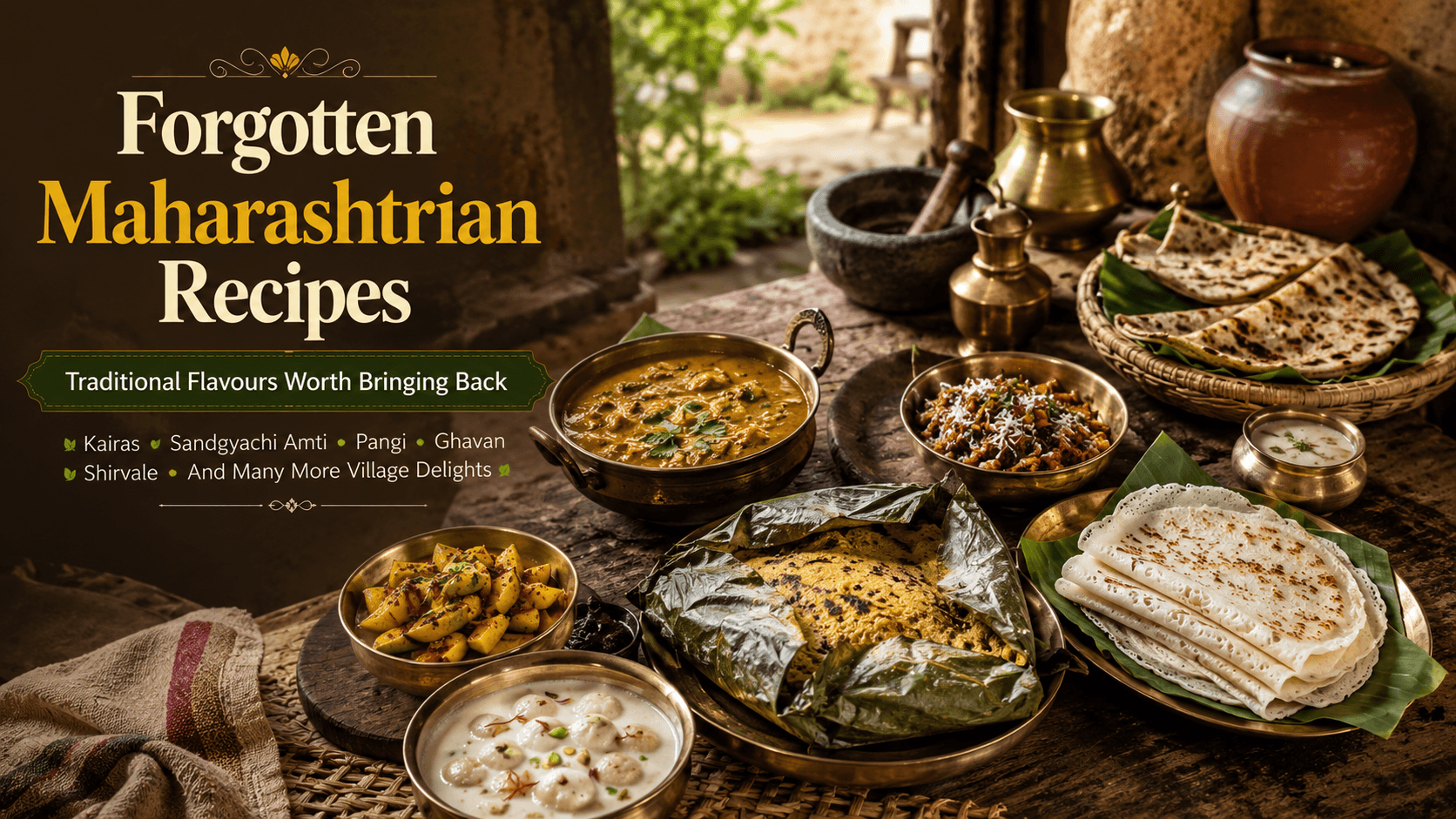
Forgotten Maharashtrian Recipes Worth Reviving
Maharashtrian food is known for favourites like Misal Pav, Vada Pav, Puran Poli and Modak, but the state’s true culinary richness goes much deeper. Across villages, coastal homes, and farming communities, families once cooked with seasonal produce, local grains, dried ingredients, and time-tested methods that made every meal both practical and meaningful.
Many of these recipes are now fading from everyday use. Busy routines, smaller families, and the easy availability of packaged foods have changed the way people cook. Still, these dishes remain valuable because they show how Maharashtra’s people adapted food to climate, crops, and tradition.
Why These Recipes Matter Today
Forgotten Maharashtrian recipes are not just old recipes. They are examples of sustainable cooking, smart preservation, and regional identity. Long before convenience foods became common, households relied on drying, roasting, fermenting, and hand-preparing ingredients to create nourishing meals that lasted through changing seasons.
- They use local ingredients like jowar, bajra, rice, horse gram, coconut, and raw mango.
- They reflect seasonal food planning and low-waste cooking.
- They preserve regional skills passed down through generations.
- They can be adapted into modern, quick, and healthy meals.
12 Forgotten Maharashtrian Recipes You Should Try
1. Kairas – A sweet, spicy, and tangy raw mango preparation that often includes jaggery, coconut, peanuts, and sesame. It is especially loved during summer.
2. Sandgyachi Amti – A rustic curry made with sun-dried sandge. This dish highlights traditional food preservation and is deeply rooted in village kitchens.
3. Bharda Bhaat – A hearty rice dish prepared with coarse pulse mixtures and spices. It is simple, filling, and full of roasted flavour.
4. Ukadpendi – A quick comfort food made from roasted flour, tempering, and hot water. It is light, easy to prepare, and ideal for breakfast.
5. Pangi – A regional flatbread cooked between leaves, often banana leaves, for a unique aroma and soft texture.
6. Shirvale with Coconut Milk – Delicate rice-flour noodles served with sweetened coconut milk. This dish is especially popular in Konkan-style festive cooking.
7. Gavhlyachi Kheer – A traditional sweet made with tiny hand-rolled wheat pieces cooked in milk, sugar or jaggery, and fragrant spices.
8. Ghavan – A thin rice crepe from coastal Maharashtra, often paired with chutney, curry, or sweet coconut milk.
9. Pohyache Mirgund – Sun-dried poha wafers that could be stored and roasted later, showing how families prepared food ahead of the monsoon.
10. Kulith Pithla – A traditional horse gram preparation that pairs beautifully with bhakri or rice and adds variety to pulse-based cooking.
11. Dhirde – A savoury pancake made from grains or pulses, often served with chutney, curd, or vegetable sides.
12. Patvadi Rassa – A bold and flavourful curry with steamed gram-flour pieces in spicy gravy, popular in parts of Vidarbha and Marathwada.
What These Dishes Reveal About Maharashtrian Food Culture
These recipes show that traditional Maharashtrian cooking was practical, seasonal, and resourceful. Summer dishes used raw mangoes and drying techniques. Monsoon foods often included stored ingredients like sandge and mirgund. Rural kitchens made full use of local grains, pulses, and homemade masalas to create meals that were both affordable and satisfying.
- Seasonal planning: Ingredients were chosen based on what was naturally available.
- Preservation: Drying and storing foods helped families prepare for lean months.
- Minimal waste: Leftover grains, flour, and produce were often turned into new dishes.
- Community knowledge: Many recipes were shared across generations and prepared together.
How to Bring These Recipes Back
Reviving these foods does not require making everything from scratch every time. Families can begin with simple dishes like Ghavan, Dhirde, or Ukadpendi and slowly explore more traditional recipes. Ready-to-cook mixes, regional flours, dried ingredients, and authentic masalas can also make old recipes easier for modern kitchens.
Another helpful step is documenting family recipes. Ask elders about measurements, methods, and serving ideas. Write them down, record videos, or cook together so the knowledge is not lost.
Final Thoughts
Forgotten Maharashtrian recipes deserve to return because they carry the flavour, memory, and wisdom of generations. From Kairas and Sandgyachi Amti to Shirvale and Patvadi Rassa, these dishes remind us that food is more than taste. It is a record of culture, season, and family life.
By cooking these recipes again, supporting rural producers, and sharing traditional food with younger generations, we can keep Maharashtra’s culinary heritage alive in a modern and meaningful way.