
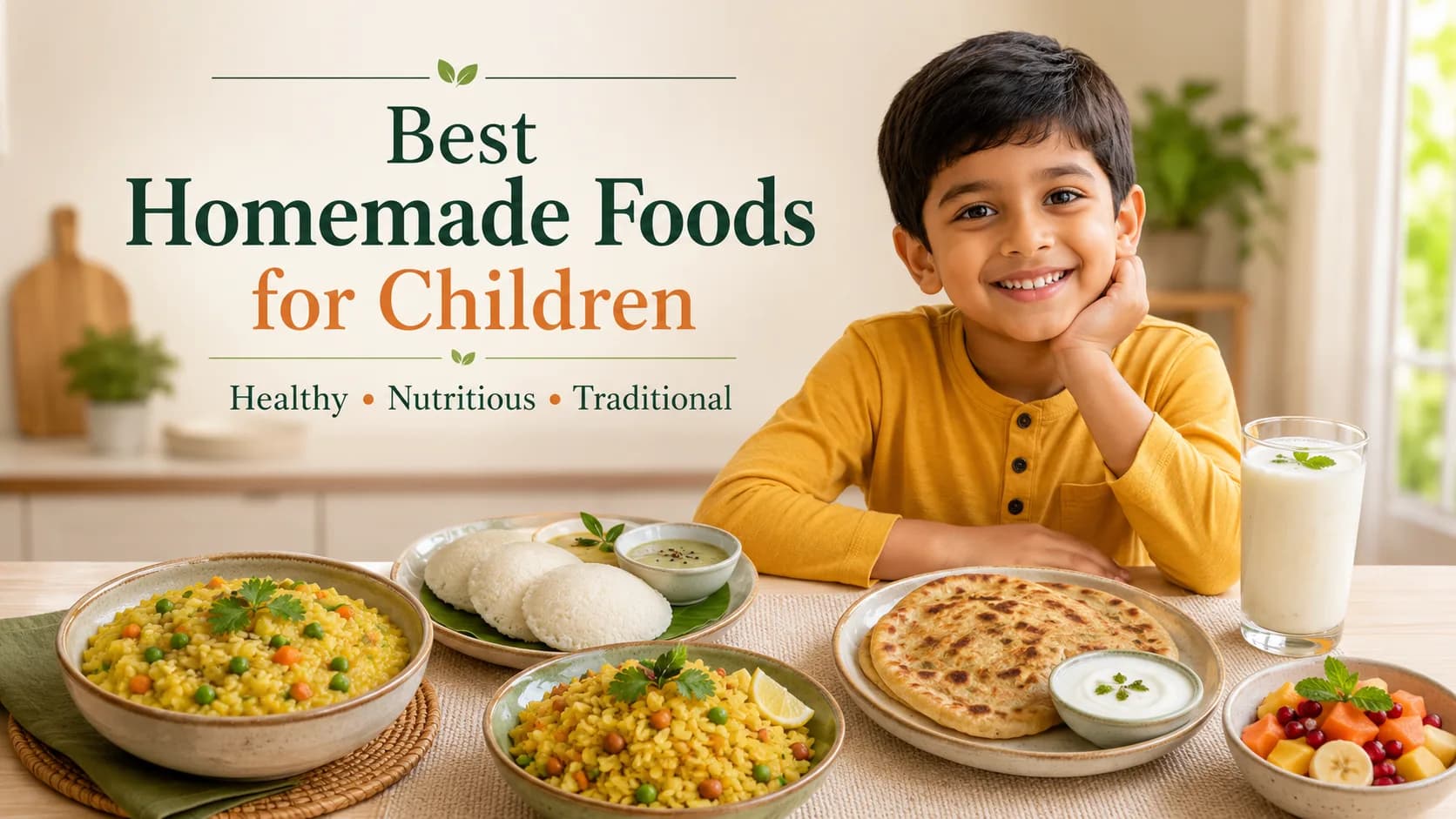
Below is a comprehensive, search-optimized blog written for Gawakadcha.com. It targets parents looking for healthy, practical, and traditional Indian food ideas for children.
Best Homemade Foods for Children: Healthy and Nutritious Indian Food Ideas
Introduction
Every parent wants their child to grow healthy, active, and strong. However, choosing the right food for children can become difficult when packaged snacks, sugary drinks, instant noodles, and highly processed foods are easily available.
Freshly prepared homemade food is usually one of the best everyday choices for children because parents can control the ingredients, cooking method, salt, sugar, oil, and portion size. Homemade meals can also introduce children to different grains, pulses, vegetables, fruits, dairy products, and traditional Indian recipes.
The best homemade foods for children do not need to be expensive or complicated. Simple foods such as vegetable khichdi, dal-rice, poha, idli, curd, millet porridge, seasonal fruits, and homemade snacks can provide variety and balanced nourishment.
This guide explores healthy homemade food ideas for children, foods for different mealtimes, practical lunch-box options, and simple tips for developing better eating habits.
Important note: A child’s nutritional needs depend on age, growth, physical activity, allergies, and health conditions. Parents should consult a qualified paediatrician or dietitian when personalised dietary guidance is required.
Why Is Homemade Food Good for Children?
Homemade food gives parents greater control over what their children eat. Meals can be prepared using familiar ingredients and adjusted according to the child’s age, taste, chewing ability, and nutritional needs.
Better Ingredient Control
When food is prepared at home, parents can choose fresh vegetables, whole grains, pulses, good-quality oils, natural spices, and other trusted ingredients.
They can also reduce unnecessary:
-
Added sugar
-
Excess salt
-
Artificial colours
-
Strong flavouring agents
-
Excessive oil
-
Highly refined ingredients
Easier Portion Control
Children require portions appropriate for their age and appetite. Homemade meals can be served in smaller quantities and increased gradually when the child is still hungry.
Greater Food Variety
Home cooking makes it easier to rotate different ingredients throughout the week. One day may include rice and dal, while another may include jowar, bajra, ragi, vegetables, paneer, eggs, or curd.
Customised for the Child
Homemade foods can be made softer, less spicy, less oily, or easier to digest. Parents can also avoid ingredients that trigger allergies or discomfort.
Development of Healthy Eating Habits
Children who regularly eat fresh home-cooked meals become familiar with natural tastes and different food textures. This may reduce excessive dependence on packaged snacks and sugary foods.
Quick List of the Best Homemade Foods for Children
| Food | Main Ingredients | Suitable Meal |
|---|---|---|
| Vegetable khichdi | Rice, dal, vegetables | Lunch or dinner |
|
Dal-rice |
Dal, rice, vegetables | Lunch |
| Millet porridge | Ragi, jowar or bajra | Breakfast |
| Vegetable poha | Poha, vegetables, peanuts | Breakfast |
| Idli and sambar | Rice, urad dal, vegetables | Breakfast or lunch |
| Vegetable paratha | Wheat flour, vegetables | Breakfast or lunch box |
| Curd rice | Rice, curd | Lunch |
| Paneer bhurji | Paneer, vegetables | Lunch or dinner |
| Dhapate or thalipeeth | Multigrain flour, spices | Breakfast |
| Homemade soup | Vegetables, pulses | Evening or dinner |
| Seasonal fruit bowl | Fresh fruits | Snack |
| Roasted chana | Bengal gram | Snack |
| Homemade laddoo | Ragi, sesame, peanuts or dry fruits | Occasional snack |
| Makhana snack | Roasted fox nuts | Snack |
| Homemade chivda | Poha, nuts, mild spices | Snack |
1. Vegetable Khichdi
Vegetable khichdi is one of the simplest and most comforting homemade meals for children. It is generally prepared using rice, moong dal, mild spices, and seasonal vegetables.
Carrots, peas, pumpkin, spinach, bottle gourd, beans, and tomatoes can be added according to availability.
Khichdi can be made soft for younger children and slightly textured for older children. A small quantity of ghee may be added for taste and energy.
Why Children May Like It
-
Soft and easy to eat
-
Mild in taste
-
Can include several vegetables
-
Suitable for lunch or dinner
-
Easy to customise
2. Dal and Rice
Dal-rice is a familiar Indian meal that can be included regularly in a child’s diet. Different dals, such as moong, masoor, toor, and mixed dal, can be used to add variety.
Serve dal-rice with a vegetable, curd, or a small salad for a more balanced meal.
Parents can keep the dal mild and avoid excessive chilli. Unpolished pulses may also be selected when they suit the family’s preferences and cooking requirements.
3. Ragi Porridge
Ragi is a traditional millet commonly used in porridges, rotis, pancakes, and laddoos. Ragi porridge can be prepared using ragi flour and milk or water.
For older children, flavour can be added with fruit, dates, cardamom, or a small amount of jaggery. Added sweeteners should be kept limited.
Ragi porridge can be a convenient breakfast option, especially when children prefer soft foods.
4. Vegetable Poha
Poha is a quick and popular Indian breakfast. Adding peas, carrots, onions, tomatoes, coriander, and peanuts can improve its flavour and variety.
For younger children, peanuts should be crushed or avoided when there is a choking risk. Whole nuts should not be given to very young children.
Vegetable poha can also be packed in a school lunch box because it is light, filling, and easy to carry.
5. Idli with Sambar
Soft idlis are convenient for children because they are easy to hold, chew, and eat. They can be served with mild vegetable sambar or curd.
Parents can also prepare variations such as:
-
Vegetable idli
-
Ragi idli
-
Carrot idli
-
Mini idli
-
Moong dal idli
Chutney can be served in a small quantity, depending on the child’s tolerance for spices.
6. Vegetable Paratha
Vegetable parathas are useful for breakfast and school lunch boxes. Grated or mashed vegetables can be mixed into the dough or used as a filling.
Suitable options include:
-
Carrot paratha
-
Spinach paratha
-
Methi paratha
-
Beetroot paratha
-
Paneer paratha
-
Mixed vegetable paratha
Use moderate oil or ghee while cooking. Serve the paratha with plain curd rather than relying on sugary sauces.
7. Homemade Curd and Curd-Based Meals
Plain curd can be served with rice, paratha, khichdi, or fruit when appropriate. Homemade curd can also be used to prepare:
-
Curd rice
-
Vegetable raita
-
Fruit yoghurt without excess sugar
-
Buttermilk
-
Curd-based dips
Avoid adding large amounts of sugar to curd. Fresh fruit or a small amount of natural flavouring can be used instead.
8. Paneer and Vegetable Dishes
Paneer can be added to a child’s meals in several forms. It has a mild taste and works well with vegetables.
Homemade paneer dishes may include:
-
Paneer bhurji
-
Paneer paratha
-
Paneer rice
-
Paneer vegetable curry
-
Grilled paneer cubes
-
Paneer sandwich
Keep the spices mild and cut paneer into age-appropriate pieces.
9. Eggs Prepared at Home
For children who consume eggs, they can be included in breakfast, lunch, or dinner.
Simple preparations include:
-
Boiled egg
-
Vegetable omelette
-
Egg bhurji
-
Egg paratha
-
Egg rice
-
Egg sandwich
Egg dishes should be cooked properly. Parents should also observe whether the child has any known egg allergy.
10. Dhapate or Thalipeeth
Dhapate and thalipeeth are traditional Maharashtrian foods made using flour mixtures, spices, and other ingredients.
Depending on the recipe, the flour mixture may include wheat, jowar, bajra, gram flour, or other grains. Grated vegetables, curd, coriander, sesame, and mild spices may also be added.
For children, prepare them softer and less spicy. Serve with curd, homemade chutney, or a vegetable dish.
Traditional ready-to-make flour mixes can also help busy parents prepare regional foods more conveniently. Parents should check the ingredient list and choose products appropriate for the child’s age and dietary needs.
11. Homemade Vegetable Soup
Vegetable soup can be a comforting evening or dinner option, particularly during cooler weather.
Soup may include:
-
Carrot
-
Tomato
-
Pumpkin
-
Peas
-
Spinach
-
Sweet corn
-
Lentils
-
Beans
Avoid depending only on strained vegetable water. Where possible, retain the cooked vegetables or blend them into the soup so that more of the original food remains in the meal.
12. Seasonal Fruits
Fresh seasonal fruits are among the easiest homemade snack options for children.
Depending on the season and location, parents may offer:
-
Banana
-
Apple
-
Guava
-
Papaya
-
Orange
-
Watermelon
-
Pomegranate
-
Mango
-
Chikoo
Serve fruits in age-appropriate pieces. Whole grapes, hard fruit pieces, and fruit with seeds may create a choking risk for younger children.
Whole fruits are generally preferable to sugary packaged fruit drinks.
13. Homemade Fruit Smoothies
A smoothie can be prepared using milk or curd and fresh fruit. Banana, mango, chikoo, strawberry, or papaya may be used depending on availability.
Avoid adding excessive sugar, flavoured syrups, or ice cream. The natural sweetness of ripe fruit may be sufficient.
Smoothies should complement a balanced diet rather than replace all whole fruits, because chewing whole fruit helps children experience its natural texture.
14. Roasted Chana
Roasted chana is a simple traditional snack for older children who can chew it safely. It can be mixed with mild spices, puffed rice, or chopped vegetables.
For younger children, hard roasted chana may create a choking risk. Parents should choose an age-appropriate form or consult a health professional when unsure.
15. Roasted Makhana
Makhana can be lightly roasted with a small quantity of ghee and mild seasoning. It can serve as an alternative to heavily salted packaged chips.
Do not make it excessively salty or spicy. The texture should also be suitable for the child’s age and chewing ability.
16. Homemade Chivda
Homemade chivda can be prepared with poha, roasted chana, curry leaves, mild spices, and nuts.
The advantage of preparing chivda at home is that parents can control the oil, salt, and ingredients. For younger children, whole nuts and hard pieces should be removed or crushed appropriately.
17. Homemade Laddoos
Traditional laddoos can be prepared using ingredients such as:
-
Ragi
-
Sesame
-
Peanuts
-
Gram flour
-
Dry fruits
-
Coconut
-
Jaggery
Although homemade laddoos may contain nutritious ingredients, they can also be calorie-dense and sweet. They should be served in small portions rather than treated as an unlimited everyday snack.
Peanut, sesame, and nut allergies must also be considered.
18. Vegetable Upma
Upma can be made with semolina, broken wheat, millet, or other suitable grains. Adding vegetables improves its colour, texture, and variety.
Vegetable upma can be served for breakfast or packed in a school lunch box. Keep it soft and mildly seasoned for younger children.
19. Homemade Dosa or Cheela
Dosa and cheela are versatile homemade foods that can be prepared using different ingredients.
Options include:
-
Moong dal cheela
-
Besan cheela
-
Ragi dosa
-
Vegetable dosa
-
Mixed dal dosa
-
Oats cheela
Finely chopped or grated vegetables can be added to the batter. Serve with mild chutney, curd, or vegetable sambar.
20. Homemade Sandwiches and Rolls
Sandwiches and rolls can become healthy lunch-box options when prepared with balanced fillings.
Suitable fillings include:
-
Paneer and vegetables
-
Egg and vegetables
-
Curd and cucumber
-
Potato and peas
-
Sprouts for older children
-
Homemade hummus
-
Grated carrot and beetroot
Use whole-grain bread or homemade roti where suitable. Avoid making mayonnaise, cheese spreads, or sugary sauces the main filling.
Healthy Homemade Breakfast Ideas for Children
A balanced breakfast can help children begin the day with energy and concentration.
Practical options include:
-
Vegetable poha with curd
-
Idli with mild sambar
-
Ragi porridge with fruit
-
Vegetable paratha with curd
-
Moong dal cheela
-
Egg and roti
-
Dhapate with curd
-
Upma with vegetables
-
Homemade dosa
-
Paneer sandwich
Breakfast does not need to be elaborate. It should be practical, satisfying, and suitable for the child’s appetite.
Healthy School Lunch-Box Ideas
Children are more likely to eat lunch when the food is easy to handle and visually appealing.
Try combinations such as:
| Main Food | Side |
|---|---|
| Vegetable paratha | Plain curd |
| Mini idli | Mild chutney |
| Paneer roll | Fruit pieces |
| Vegetable poha | Cucumber slices |
| Egg sandwich | Seasonal fruit |
| Moong cheela | Curd dip |
| Dhapate | Homemade chutney |
| Vegetable rice | Raita |
| Upma | Banana |
| Homemade dosa roll | Paneer filling |
Avoid overpacking the lunch box. A small quantity that the child finishes is often better than a large portion that returns uneaten.
Healthy Homemade Evening Snacks
Children commonly ask for snacks after school. This is often when packaged chips, biscuits, and sugary drinks become convenient choices.
Healthier homemade alternatives include:
-
Fruit with curd
-
Roasted makhana
-
Vegetable sandwich
-
Corn and vegetable chaat
-
Mini idli
-
Homemade chivda
-
Ragi pancake
-
Boiled egg
-
Paneer cubes
-
Banana smoothie
-
Sweet potato chaat
-
Homemade laddoo in a small portion
Packaged foods do not need to be completely prohibited. However, they should not replace balanced meals and fresh foods regularly.
Foods to Limit in a Child’s Daily Diet
Parents should limit frequent consumption of foods that are high in added sugar, salt, or unhealthy fats.
These may include:
-
Sugary drinks
-
Candy and sweets
-
Deep-fried packaged snacks
-
Instant noodles
-
Cream-filled biscuits
-
Excessive bakery products
-
Highly salted chips
-
Artificially flavoured drinks
-
Excessively sugary breakfast cereals
-
Frequent fast food
Strictly banning every treat may sometimes create more interest in it. A balanced approach that keeps such foods occasional may be more practical.
How to Encourage Children to Eat Homemade Food
Children may reject unfamiliar food at first. Patience and repeated exposure are often required.
Involve Children in Food Preparation
Let children wash vegetables, mix ingredients, select fruits, or help arrange food on the plate. Participation can increase curiosity.
Make Food Colourful
Use naturally colourful ingredients such as carrots, peas, beetroot, spinach, pumpkin, tomatoes, and fruits.
Offer Small Portions
Large portions can feel overwhelming. Begin with a small quantity and offer more when requested.
Avoid Force-Feeding
Pressure can create negative feelings around food. Encourage children calmly and allow them time to become familiar with new tastes.
Maintain Regular Meal Timings
A predictable routine can reduce constant snacking and help children recognise hunger.
Set an Example
Children often copy adults. When the family eats vegetables, fruits, pulses, and traditional foods together, children are more likely to try them.
Introduce One New Food at a Time
Do not change the entire meal suddenly. Serve a new food alongside something familiar.
Homemade Food Is Not Automatically Healthy
Homemade food can also become unhealthy when it contains excessive oil, sugar, salt, or refined ingredients.
For example:
-
Homemade fried snacks are still fried.
-
Homemade sweets may still contain large amounts of sugar.
-
Homemade pickles can be high in salt and oil.
-
Homemade biscuits may still contain refined flour and fat.
The main benefit of home cooking is control. Parents should use that control to create meals that are varied, balanced, and age-appropriate.
How Gawakadcha.com Supports Traditional Homemade Food Choices
Many parents want to prepare traditional food but may not have the time to source and combine every ingredient.
Gawakadcha.com connects customers with selected rural products, homemade-style foods, traditional flour mixes, spices, grains, pulses, chutneys, and other products made by rural entrepreneurs and women-led groups.
Products such as multigrain flour mixes, millet-based foods, homemade masalas, unpolished pulses, and traditional snacks can help families include regional flavours in their meals.
Parents should always read product labels, check ingredients, consider allergen information, follow preparation instructions, and select products suitable for their children.
Frequently Asked Questions
What is the best homemade food for children?
There is no single best food. A balanced combination of grains, pulses, vegetables, fruits, dairy products, eggs or other protein sources, and suitable fats is more beneficial than depending on one item.
Which Indian homemade foods are healthy for children?
Vegetable khichdi, dal-rice, poha, idli, vegetable paratha, millet porridge, curd rice, paneer dishes, cheela, fruits, and homemade soups are practical options.
What can I give my child instead of packaged snacks?
Try fruits, roasted makhana, homemade chivda, vegetable sandwiches, boiled eggs, paneer cubes, mini idlis, corn chaat, or a small homemade laddoo.
Are millet foods good for children?
Millets such as ragi, jowar, and bajra can add variety to the diet. They should be prepared in age-appropriate forms and included as part of a balanced meal plan.
Can children eat homemade pickles and chutneys?
They can be offered in small quantities when suitable for the child’s age. Pickles may contain significant salt and oil, while some chutneys may contain chilli, peanuts, sesame, or other allergens.
How can I make homemade food attractive to children?
Use colourful ingredients, smaller portions, interesting shapes, mild flavours, and simple plating. Involving the child in preparation can also help.
What is a healthy school lunch for children?
Vegetable paratha with curd, paneer rolls, mini idlis, vegetable poha, egg sandwiches, moong cheela, or vegetable rice with raita are practical options.
Conclusion
The best homemade foods for children are simple, balanced, fresh, and appropriate for their age. Traditional Indian foods such as vegetable khichdi, dal-rice, poha, idli, millet porridge, paratha, curd, paneer, fruits, and homemade snacks can provide variety without making daily cooking complicated.
Homemade food also gives parents control over ingredients, oil, salt, sugar, spice levels, and portions. However, home-cooked food should still be planned carefully because homemade sweets, fried foods, and salty snacks can also be unhealthy when consumed excessively.
The goal is not to create a perfect plate at every meal. The goal is to build consistent habits based on fresh food, balanced portions, traditional ingredients, and variety.
By combining home-cooked meals with carefully selected traditional products from trusted producers, families can help children enjoy food that is nutritious, familiar, and connected to India’s rich culinary heritage.