
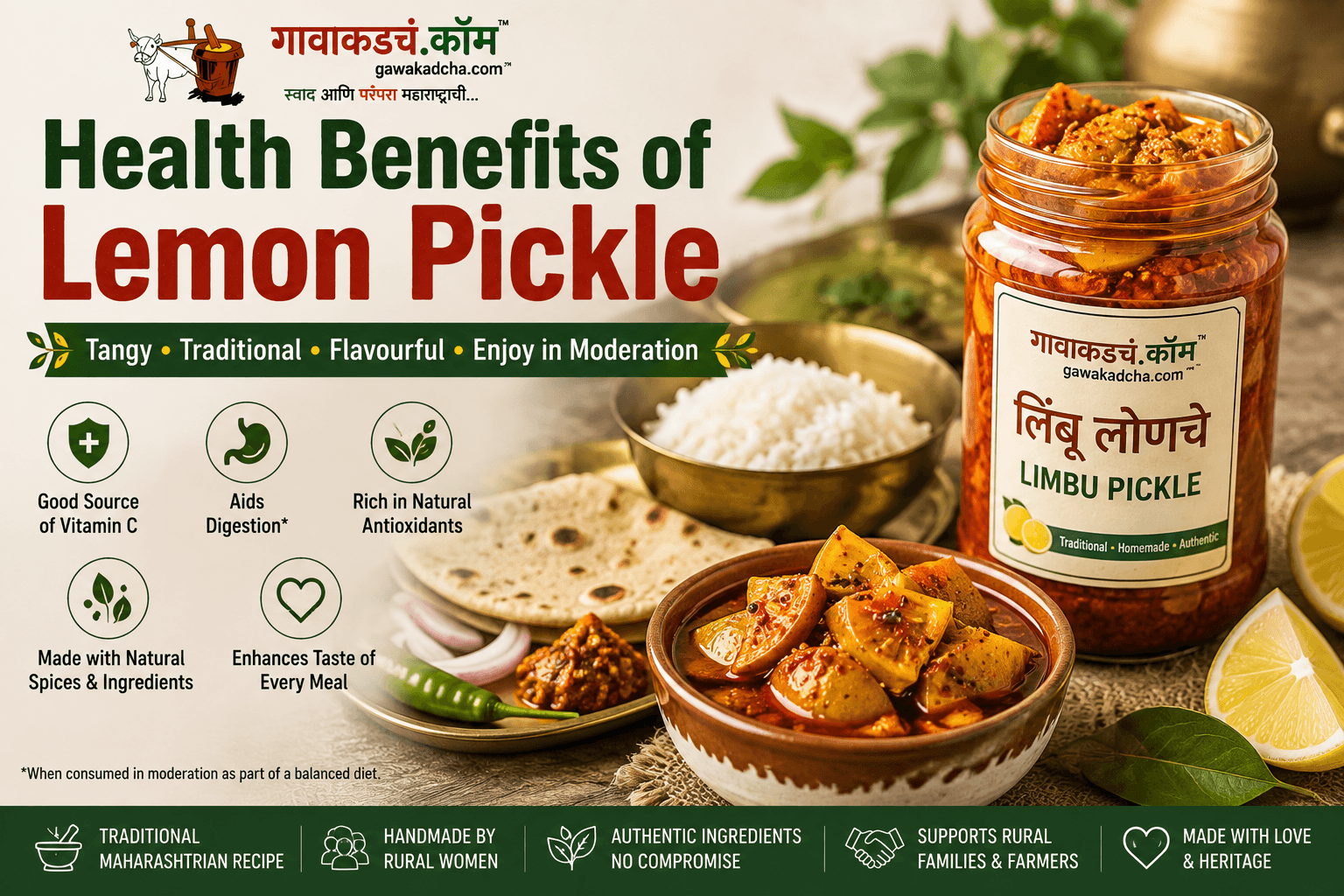
Health Benefits of Lemon Pickle: Nutrition, Uses & Things You Should Know
Lemon pickle—known as Nimbu Achar, Limbu Lonche or Lemon Achar—is one of the most familiar accompaniments in Indian kitchens.
A small spoonful can transform a simple plate of Dal-Rice, Khichdi, Roti, Paratha or Bhakri with its tangy, salty and spicy flavour.
For generations, Indian households have preserved seasonal lemons with salt and spices to create pickles that can be enjoyed over an extended period. Today, consumers are also searching online for homemade lemon pickle, traditional lemon pickle, lemon pickle benefits and Limbu Lonche online as regional foods return to modern kitchens.
But is lemon pickle actually healthy?
Lemons naturally contain vitamin C and other plant compounds, while spices used in traditional pickles add flavour and a variety of naturally occurring phytochemicals. However, pickling, storage and processing can reduce some nutrients, and pickles can also contain significant amounts of salt.
So the right question is not whether lemon pickle is a “superfood.”
It is:
Can a small amount of good-quality lemon pickle fit into a balanced Indian diet?
For most people, the answer can be yes—when consumed in moderation.
What Is Lemon Pickle?
Traditional Indian lemon pickle is prepared using whole lemons or lemon pieces together with salt and spices.
Recipes vary widely between regions and households.
Common ingredients may include:
Lemon
Salt or black salt
Turmeric
Red chilli
Mustard
Asafoetida
Fenugreek
Cumin
Cloves
Mixed spices
Oil in some recipes
Some lemon pickles are fermented naturally, while others rely mainly on salt, acidity, spices or oil for preservation.
This distinction matters because not every lemon pickle is a fermented probiotic food.
Lemon Pickle Nutrition: What Does It Offer?
The nutritional profile of lemon pickle depends heavily on its recipe.
The original lemon contributes vitamin C and plant compounds. Citrus fruits are recognised sources of vitamin C, an essential nutrient that also functions as an antioxidant and supports collagen formation, iron absorption and normal immune function.
However, vitamin C is sensitive to heat and prolonged storage, so the amount present in a finished pickle may be lower than in fresh lemon.
The spices used in lemon pickle also contribute flavour and naturally occurring plant compounds, although the serving size of pickle is usually small.
The biggest nutritional concern is generally sodium, because salt plays an important role in traditional preservation.
7 Potential Benefits of Lemon Pickle
1. Brings Lemon-Based Ingredients into the Meal
Fresh lemons are citrus fruits and naturally provide vitamin C.
A traditional lemon pickle made from actual lemon pieces retains components of the fruit, although the final vitamin content depends on processing and storage.
Therefore, lemon pickle should not replace fresh fruits and vegetables as a major vitamin C source.
It is better viewed as a flavourful accompaniment made from a nutritious fruit.
2. Can Make Simple Healthy Meals More Enjoyable
One practical advantage of pickle is its ability to improve the taste of very simple foods.
A small portion of Limbu Lonche can complement:
Dal-Rice
Khichdi
Roti
Bhakri
Paratha
Curd Rice
Millet meals
Vegetable dishes
This can make basic home-cooked meals more appealing without requiring elaborate gravies or sauces.
For example:
Dal + Rice + Vegetable + Curd + Small Portion of Lemon Pickle
can create a satisfying traditional meal.
The health value comes mainly from the complete meal—not the pickle alone.
3. Traditional Spices Add Flavour Without Needing Excessive Quantities
Lemon pickle often contains aromatic spices such as turmeric, chilli, cloves, mustard, cumin or asafoetida.
These ingredients produce strong flavour even when the pickle is consumed in a relatively small portion.
A highly flavourful accompaniment can make an otherwise simple meal more enjoyable.
However, spices should not be marketed as disease treatments when consumed in the small quantities normally present in pickle.
4. Some Traditionally Fermented Pickles May Contain Beneficial Microorganisms
Traditional fermented vegetable and fruit pickles can develop populations of lactic acid bacteria during fermentation.
Research on Indian fermented pickles has identified lactic acid bacteria and investigated their potential probiotic properties.
But this point requires an important qualification:
Not every lemon pickle is probiotic.
Whether live beneficial microorganisms remain in the final product depends on:
Fermentation method
Salt concentration
Acidity
Heat treatment
Storage
Packaging
Therefore, unless a specific product is genuinely fermented and its live cultures are verified, it should not automatically be marketed as a probiotic food.
5. Helps Preserve Seasonal Lemons
Pickling is one of India’s oldest food-preservation traditions.
When lemons are abundant, households can preserve them with salt and spices rather than allowing the fruit to go to waste.
This traditional technique helped families extend the usefulness of seasonal ingredients long before modern refrigeration became widely available.
Although this is more a food-system benefit than a direct medical benefit, it demonstrates the practical wisdom behind traditional Indian pickles.
6. A Small Serving Delivers Strong Taste
Pickle is generally eaten in small quantities.
Because lemon, chilli, salt and spices create an intense flavour, even a small spoonful can add character to an entire meal.
This makes portion control easier than with some sauces or accompaniments that are consumed in larger quantities.
Still, “small serving” is important—the salty taste is exactly why pickle should not be eaten freely in large amounts.
7. Keeps Traditional Indian Food Culture Alive
Lemon pickle has nutritional relevance, but it also has cultural value.
The preparation of Limbu Lonche preserves knowledge related to:
Seasonal food
Household preservation
Spice combinations
Regional recipes
Rural food businesses
Women-led homemade enterprises
When traditional pickles continue to receive customer demand, these skills remain economically relevant for small rural producers.
Is Lemon Pickle Good for Digestion?
You will often see claims online that lemon pickle “improves digestion.”
This should not be overstated.
Certain spices traditionally used in Indian cooking are associated culturally with digestion, and fermented pickles may contain microorganisms produced during fermentation.
However, the effect of a specific lemon pickle depends on its recipe and production process.
A person should not use pickle as a treatment for digestive disorders.
For general digestive health, dietary fibre, adequate fluids, vegetables, fruits, whole grains and an appropriate overall diet are much more important.
Is Lemon Pickle Good for Immunity?
Lemons naturally contain vitamin C, which is required for normal immune function.
But it would be misleading to claim that eating lemon pickle alone will “boost immunity” or prevent infections.
The vitamin C content can decline during storage and processing, and pickle is generally consumed in small servings.
Fresh fruits and vegetables should remain the main dietary sources of vitamin C.
The Biggest Concern: Salt
This is the most important nutritional point about pickle.
Salt is traditionally used because it contributes to preservation and flavour.
But excessive sodium intake is associated with higher blood pressure and increased cardiovascular risk. India’s ICMR-NIN Dietary Guidelines recommend restricting salt intake and specifically identify pickles among foods that people managing high blood pressure may need to avoid or restrict.
Therefore:
More lemon pickle does not mean more health benefit.
A small serving is a more sensible approach.
People with:
High blood pressure
Kidney disease
Heart conditions
Medically prescribed low-sodium diets
should follow advice from their doctor or qualified dietitian regarding pickles.
Homemade Lemon Pickle vs Commercial Lemon Pickle
Neither category is automatically healthier.
Homemade-Style Lemon Pickle May Offer:
Traditional recipe
Regional flavour
Small-batch character
Familiar ingredients
Commercial Pickle May Offer:
Standardised production
Consistent packaging
Clear shelf-life information
Wider availability
For either type, evaluate:
Ingredient list
Salt
Oil
Preservatives, if used
Manufacturer information
Hygiene
Packaging
Shelf life
Storage instructions
The words “homemade,” “traditional” or “natural” should never replace transparent product information.
How Much Lemon Pickle Should You Eat?
There is no universal serving size suitable for everyone.
However, pickle is best treated as a condiment, not as a main vegetable serving.
A small amount alongside a complete meal is generally more sensible than eating several large spoonfuls.
People who need to reduce sodium should be particularly careful.
Healthy Ways to Enjoy Lemon Pickle
With Dal-Rice
A small amount of tangy pickle can complement a simple Dal-Rice meal.
With Jowar or Bajra Bhakri
Limbu Lonche can add sharp flavour to traditional millet meals.
With Khichdi
The contrast between soft Khichdi and tangy pickle is a classic combination.
With Paratha and Curd
Use a small portion alongside plain curd rather than large amounts of pickle.
With Dhapate
Traditional Maharashtrian Dhapate pairs naturally with curd, chutney and a little pickle.
With Simple Vegetable Meals
Pickle can provide flavour without requiring a heavy gravy.
How to Choose a Good Lemon Pickle Online
When searching for homemade lemon pickle online, check:
Lemon should be clearly listed as an ingredient.
Check the complete spice and salt declaration.
Review the manufacturer details.
Check pack size.
Look for manufacturing/packing information.
Review shelf life.
Check storage instructions.
Ensure the container is properly sealed.
Use a trusted seller.
Avoid judging quality only by bright colour or excessive oil.
How to Store Lemon Pickle Properly
Correct storage helps maintain taste and safety.
General practices include:
Keep the container tightly closed.
Use a clean, dry spoon.
Avoid introducing moisture.
Keep away from direct sunlight unless the product instructions state otherwise.
Follow manufacturer storage guidance.
Do not consume a product that develops unusual mould, gas, off-odour or unexpected spoilage.
Different pickle recipes have different storage requirements, so always follow the label.
Gawakadcha Homemade Lemon Pickle
Gawakadcha.com currently lists Limbu Pickle / Lemon Pickle, prepared using:
Lemon, Black Salt, Cloves, Red Chilli, Turmeric Powder, Asafoetida and Mixed Spices. The current listing describes it as traditionally handmade and produced by a self-help group in Chhatrapati Sambhaji Nagar.
The product is designed as an accompaniment for foods such as:
Roti
Chapati
Paratha
Rice
The current product instructions recommend using a clean, dry spoon and storing the container in a cool, dry place away from direct sunlight.
This also creates a useful SEO connection between educational searches such as “lemon pickle benefits” and transactional searches such as “buy homemade lemon pickle online.”
Frequently Asked Questions
What are the benefits of lemon pickle?
Lemon pickle provides strong flavour from lemon and spices and may retain some naturally occurring compounds from its ingredients. Its main role should still be as a small accompaniment rather than a health supplement.
Is lemon pickle healthy?
It can fit into a balanced diet in small quantities, but its salt content should be considered.
Does lemon pickle contain vitamin C?
Lemon naturally contains vitamin C, but storage and processing can reduce vitamin C levels. Therefore, pickle should not replace fresh citrus fruit as a vitamin C source.
Is lemon pickle probiotic?
Not automatically. Only appropriately fermented pickles may contain relevant live microorganisms, and processing or storage can affect them.
Can people with high blood pressure eat lemon pickle?
Pickles can contain substantial salt. ICMR-NIN advises restricting salt and specifically lists pickles among foods people with hypertension may need to avoid or limit.
Can lemon pickle be eaten every day?
A small portion may fit into some diets, but daily suitability depends on total sodium intake and individual health needs.
Where can I buy homemade lemon pickle online?
Traditional Limbu/Lemon Pickle is available through regional food marketplaces such as Gawakadcha.com.
Conclusion
The health benefits of lemon pickle should be understood realistically.
Lemon begins as a nutritious citrus fruit, while traditional spices provide strong flavour and preserve an important part of Indian food culture. Some traditionally fermented pickles may also develop beneficial microorganisms.
But lemon pickle is still a condiment.
Its vitamin content can decline during processing and storage, and its salt content means that eating large quantities is not advisable—especially for people who need to control sodium.
The best way to enjoy Limbu Lonche is simple:
Use a small portion to add traditional tangy flavour to an otherwise balanced home-cooked meal.
That allows you to enjoy the taste, tradition and convenience of lemon pickle without turning a traditional accompaniment into an exaggerated health claim.