
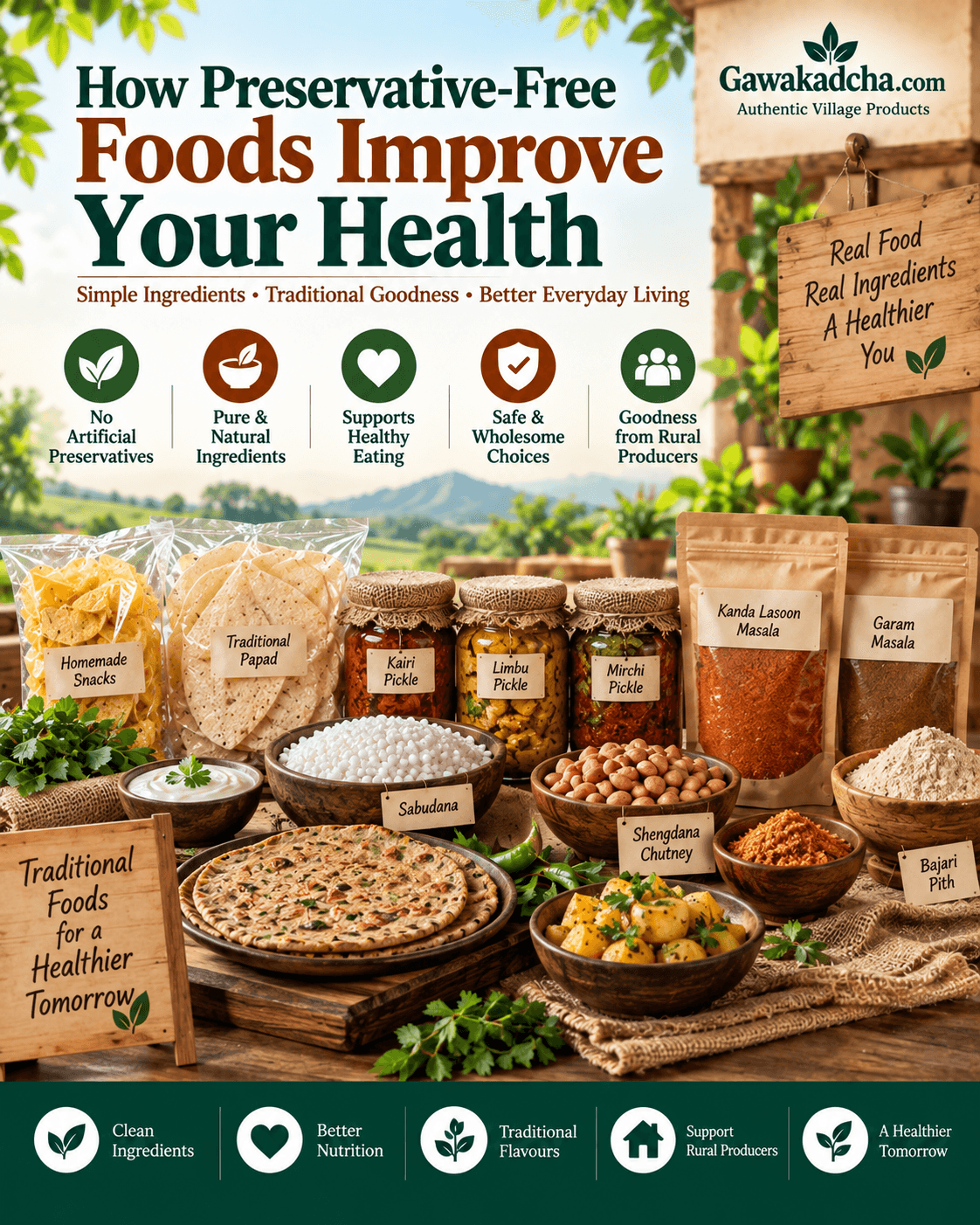
How Preservative-Free Foods Can Support Healthier Eating
Natural Ingredients • Simple Food Choices • Traditional Goodness • Better Everyday Eating
Food preservation has been an important part of human food culture for centuries. Traditional methods such as drying, pickling, fermenting and refrigeration have helped people store food for longer periods.
Today, modern food manufacturing uses various preservation methods, including permitted food preservatives, to maintain shelf life, safety, texture and flavour.
At the same time, many consumers are becoming interested in preservative-free foods and simpler ingredient lists. They want to understand what they are eating and are increasingly looking for homemade foods, traditional products and minimally processed ingredients.
But does avoiding preservatives automatically make food healthier?
Not necessarily. The answer depends on the specific food, the preservative used, the quantity consumed and the overall quality of the diet. However, choosing fresh or homemade foods without unnecessary additives can sometimes make it easier to follow a less-processed eating pattern.
This guide explains what preservative-free food means, its potential advantages, what to look for when shopping and how traditional foods can fit into a balanced diet.
What Are Preservative-Free Foods?
Preservative-free foods are foods made without added chemical or synthetic preservatives, depending on the product's formulation and labelling.
Examples may include certain:
Homemade pickles
Homemade snacks
Freshly prepared foods
Traditional spice blends
Fresh flour products
Some minimally processed foods
Traditional village food products
However, "preservative-free" does not automatically mean that a food is healthier, organic or completely unprocessed.
A food can contain no added preservatives and still be high in sugar, salt or fat. Therefore, consumers should consider the complete ingredient list and nutritional information, rather than relying on a single label claim.
Why Are People Choosing Preservative-Free Foods?
The growing interest in preservative-free foods is connected with a broader movement toward:
Homemade food
Traditional Indian foods
Minimal processing
Clean-label products
Shorter ingredient lists
Fresh ingredients
Local and regional foods
For many families, the goal is simple: understand what goes into everyday food.
1. You Know More About What Goes Into Your Food
One of the biggest advantages of preparing food at home is ingredient control.
When you make food yourself, you can decide:
Which ingredients to use
How much salt to add
How much oil to use
Which spices to include
How much sugar to add
How the food is prepared
This can make it easier to build meals around ingredients that suit your preferences.
For example, instead of buying a heavily flavoured snack, you might choose a traditional homemade preparation made with a simpler ingredient list.
2. Preservative-Free Can Fit a Minimally Processed Diet
People who are trying to reduce their intake of highly processed foods may naturally look for products with simpler ingredient lists.
Traditional foods such as:
Jowar
Bajra
Dal
Homemade chutney
Traditional masalas
Fresh vegetables
Homemade snacks
can be part of a minimally processed eating pattern.
The important distinction is that preservative-free and minimally processed are not exactly the same thing.
A food can be preservative-free while still being highly processed in other ways.
3. It Encourages Better Label Awareness
Searching for preservative-free foods online can encourage customers to read product labels more carefully.
Before purchasing, check:
Ingredients
Look at the complete ingredient list rather than relying only on front-of-pack marketing.
Nutritional Information
Check:
Sugar
Sodium
Fat
Protein
Fibre
Serving size
Storage Instructions
Preservative-free products may have different storage requirements.
Shelf Life
Always check the best-before or use-by information provided on the package.
This simple habit can improve overall food awareness.
4. Homemade Food Gives You Greater Control Over Salt and Sugar
An important point is often overlooked.
A food does not need preservatives to be unhealthy.
For example, a homemade snack can still contain substantial amounts of:
Salt
Sugar
Oil
Ghee
Therefore, one of the biggest advantages of homemade food is not simply "no preservatives."
It is the ability to control the overall recipe.
This is particularly useful for families preparing everyday meals at home.
5. Traditional Indian Foods Often Use Simple Ingredients
Indian food traditions include thousands of recipes based on relatively simple ingredients.
Consider a traditional meal:
Jowar Bhakri + Dal + Vegetable + Chutney
or
Rice + Varan + Vegetable + Pickle
These meals demonstrate how flavour can come from grains, pulses, vegetables, herbs and spices rather than relying entirely on packaged flavourings.
Traditional cooking also varies enormously from one region to another.
6. Homemade Foods Can Help Preserve Culinary Traditions
Food is not only about nutrition.
It is also connected with:
Family traditions
Regional identity
Local ingredients
Seasonal cooking
Generational recipes
Homemade Maharashtrian foods such as traditional masalas, pickles, papad, chutneys and grain-based preparations are examples of this connection.
Choosing traditional products can help keep these food traditions relevant in modern kitchens.
7. Preservative-Free Foods Can Encourage Fresh Food Habits
When a product has a shorter shelf life, it may encourage consumers to think more carefully about:
How much they purchase
How quickly they consume it
How they store it
Whether they need it regularly
Freshly prepared foods can become part of a broader balanced diet that includes vegetables, fruits, whole grains, pulses and other nutrient-rich foods.
Are Preservative-Free Foods Always Healthier?
No.
This is one of the most important points to understand.
Food preservatives serve legitimate purposes. Approved preservatives can help control microbial growth, maintain quality and extend shelf life when used according to applicable food-safety regulations.
Therefore, the simple equation:
No preservatives = healthy
is not scientifically accurate.
A better approach is:
Balanced diet + appropriate portions + nutritious ingredients + food safety + informed choices
Consumers should evaluate the entire food rather than focusing on one ingredient or marketing claim.
Preservative-Free vs Processed Foods
Factor | Preservative-Free Food | Food With Permitted Preservatives |
|---|---|---|
Added preservatives | None, if accurately labelled | May contain permitted preservatives |
Shelf life | May be shorter depending on food | Often extended |
Storage | May require greater care | Depends on product |
Ingredient control | Often simpler in homemade foods | Depends on formulation |
Health impact | Depends on overall food composition | Depends on ingredients and consumption |
Food safety | Requires appropriate preparation/storage | Preservatives may contribute to shelf stability |
The key takeaway is that preservative status alone does not determine nutritional quality.
How to Choose Good Preservative-Free Foods
If you want to buy preservative-free food online, follow these practical steps.
1. Read the Full Ingredient List
Don't rely only on the words "natural" or "homemade."
Look at the complete ingredient information.
2. Check the Product's Shelf Life
Preservative-free products may have a shorter shelf life depending on their ingredients and processing.
3. Check Storage Instructions
Some products may require:
Refrigeration
Dry storage
Airtight storage
Protection from moisture
Follow the manufacturer's instructions.
4. Check Food Safety Information
For packaged foods, look for relevant manufacturer, batch, quantity and regulatory information.
5. Choose the Right Quantity
If a product has a shorter shelf life, buying a smaller quantity can reduce food waste.
Popular Preservative-Free and Traditional Foods to Explore
Depending on how they are prepared and packaged, several traditional food categories may appeal to consumers looking for simpler products.
Homemade Pickles
Kairi, lemon and chilli pickles are traditional favourites.
Traditional Masalas
Kanda Lasoon Masala and Kala Masala can add flavour to everyday cooking.
Shenga Chutney
Peanut-based chutney is a popular Maharashtrian accompaniment.
Papad
Traditional papad varieties can be stored and prepared when required.
Traditional Grains
Jowar and Bajra can be used in traditional preparations such as bhakri.
Unpolished Pulses
Toor Dal and other pulses are staples in Indian kitchens.
The exact ingredients and preservation methods vary by product, so always check the individual product information.
Why Homemade Food Is Gaining Attention
The interest in homemade food online is part of a larger consumer shift.
People are looking for products that offer:
Traditional Taste + Ingredient Transparency + Convenience
This is especially relevant for customers living in cities who may not have easy access to traditional village-made foods.
An online marketplace can bridge this gap by helping customers discover regional products from rural and small-scale producers.
Preservative-Free Foods and Rural Food Products
Many traditional village food products are made using established preparation techniques.
Rural producers and women-led home businesses often specialise in products such as:
Pickles
Masalas
Papad
Chutneys
Traditional snacks
Flour products
Grains and pulses
Digital marketplaces can give these producers access to customers beyond their local area.
This creates a connection between:
Rural Producer → Traditional Product → Online Marketplace → Urban Customer
Discover Traditional Foods on Gawakadcha.com
Gawakadcha.com is an online marketplace focused on helping customers discover traditional and village products.
Customers can explore categories such as:
Homemade-style pickles
Maharashtrian masalas
Shenga Chutney
Papad
Traditional snacks
Jowar and Bajra
Pulses
Cold-pressed oils
Ready-to-make traditional foods
For customers interested in preservative-free food products, it is important to check the individual product's ingredient list and product description before purchasing.
The focus is not simply on selling food—it is on connecting customers with products inspired by traditional Indian food culture and rural entrepreneurship.
How to Include More Traditional Foods in Your Diet
You don't need to completely change your diet.
Start with small changes.
Breakfast
Try traditional grain-based preparations such as bhakri, thalipeeth or other regional foods.
Lunch
Combine dal, vegetables, rice or bhakri with a small serving of pickle or chutney.
Evening Snack
Choose suitable traditional snacks in sensible portions.
Dinner
Include pulses, vegetables and traditional grains according to your dietary preferences.
The goal is variety and balance, not eliminating every packaged food from your kitchen.
Frequently Asked Questions
What are preservative-free foods?
Preservative-free foods are products made without added preservatives, according to their formulation and labelling. They are not automatically healthier than foods containing permitted preservatives.
Are preservative-free foods healthier?
Not necessarily. Overall nutritional quality depends on ingredients, processing, portion size and the rest of the diet.
Why do people prefer preservative-free food?
Some consumers prefer them because they want simpler ingredient lists, homemade foods or minimally processed food options.
Does preservative-free mean homemade?
No. A commercially manufactured product can be preservative-free, while a homemade food may use traditional preservation methods.
Are homemade foods always healthier?
Not automatically. Homemade food gives you greater control over ingredients, but the nutritional quality still depends on the recipe, ingredients and portions.
How can I buy preservative-free foods online?
Read the product's ingredient list, processing information, storage instructions and shelf-life details before ordering.
What traditional foods can I explore?
Maharashtrian masalas, pickles, Shenga Chutney, papad, traditional grains, pulses and other regional foods are options to explore depending on your dietary preferences.
Where can I find traditional village food products online?
Online marketplaces such as Gawakadcha.com provide a way to discover traditional and rural food products from different producers.
Conclusion
The growing interest in preservative-free foods reflects a larger desire for transparency, traditional ingredients and more conscious food choices.
However, avoiding preservatives should not be treated as a guarantee of better health. What matters more is the overall nutritional quality of your diet, food safety, portion sizes and the ingredients used.
Homemade and traditional foods can make it easier to understand and control what goes into your meals. Products such as traditional masalas, pickles, Shenga Chutney, papad, grains and pulses can also help bring regional Indian food traditions into modern kitchens.
When shopping online, read the label, understand the ingredients, check storage requirements and choose products that genuinely fit your needs.
Simple ingredients. Traditional food. Informed choices. Better everyday eating.