
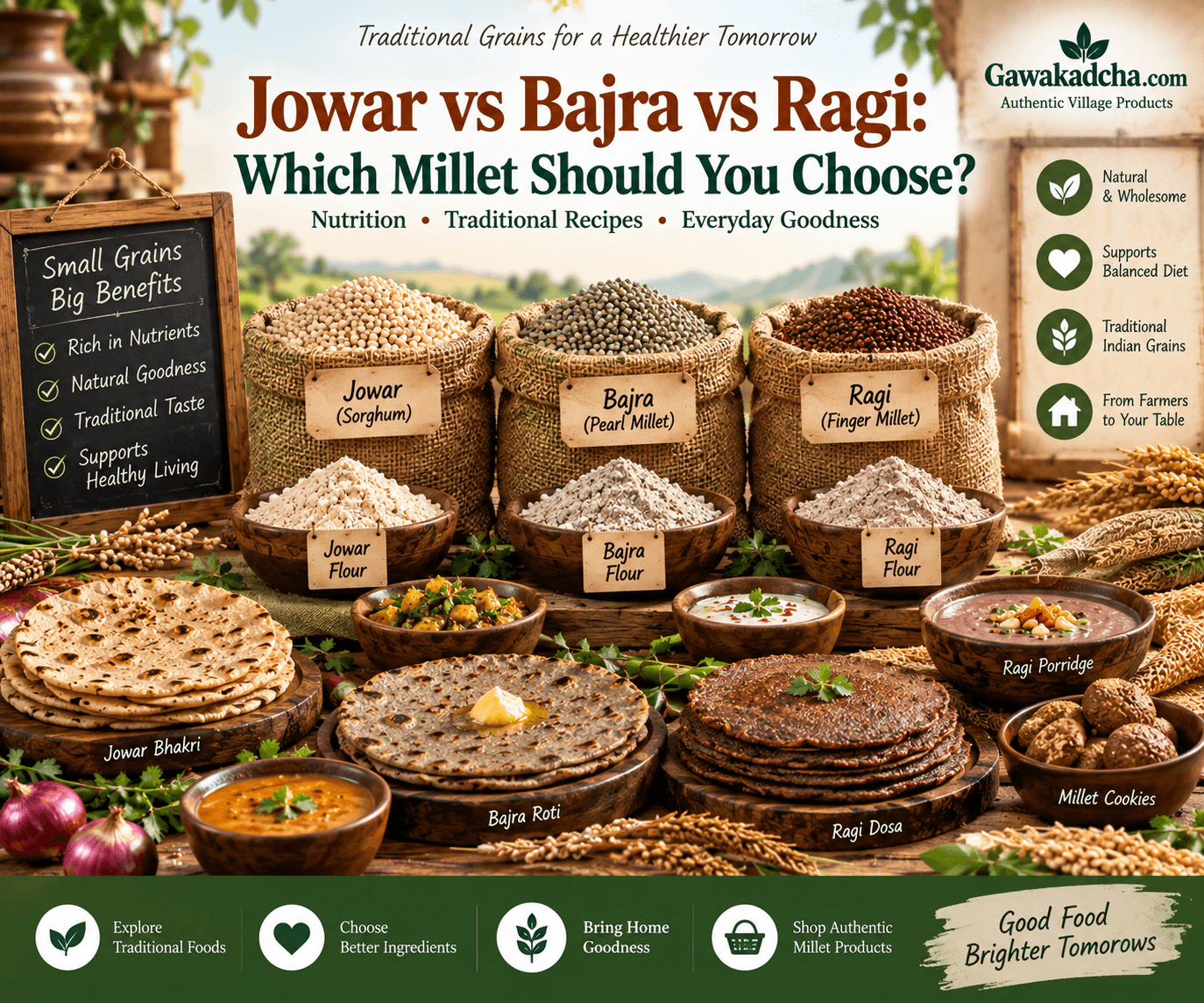
Jowar vs Bajra vs Ragi: Which Millet Should You Choose?
Traditional Grains • Everyday Nutrition • Indian Food Culture • Smart Millet Choices
Millets have always been part of India's traditional food culture, but they are receiving renewed attention in modern kitchens. From Jowar Bhakri in Maharashtra to Bajra Rotis in Rajasthan and Ragi-based foods in southern India, these grains have been enjoyed across generations.
Today, consumers searching for healthy millet foods, traditional grains and nutritious alternatives to commonly used cereals often come across three popular options: Jowar, Bajra and Ragi.
But which one should you choose?
The answer depends on what you want to prepare, your taste preferences and how the grain fits into your overall diet. There is no single millet that is universally "best" for everyone.
In this guide, we compare Jowar vs Bajra vs Ragi, explore their traditional uses, nutritional characteristics and cooking options, and explain how to choose the right millet for your kitchen.
What Are Jowar, Bajra and Ragi?
Jowar, Bajra and Ragi are traditional millets cultivated and consumed in different parts of India.
Jowar
Jowar, also known as sorghum, is particularly popular in Maharashtra and other parts of India. It is traditionally used to prepare Jowar Bhakri, flour-based dishes and other regional foods.
Bajra
Bajra, or pearl millet, is widely consumed in Rajasthan, Gujarat, Maharashtra and several other regions. Bajra flour is commonly used to prepare traditional rotis and bhakri.
Ragi
Ragi, also called finger millet, is especially popular in southern India. It is used to make flour, porridge, dosa-style preparations, roti and various modern millet foods.
ICMR-NIN's dietary guidance includes Jowar, Bajra and Ragi among the cereal and millet choices used in suggested Indian meal patterns.
Jowar vs Bajra vs Ragi: Quick Comparison
Feature | Jowar | Bajra | Ragi |
|---|---|---|---|
Common name | Sorghum | Pearl Millet | Finger Millet |
Traditional popularity | Maharashtra & several regions | Rajasthan, Gujarat, Maharashtra & others | South India & several regions |
Common form | Flour, grain | Flour, grain | Flour, grain |
Traditional dishes | Bhakri, roti | Bhakri, roti | Ragi roti, porridge, dosa |
Flavour | Mild, earthy | Rich, nutty | Distinctive, earthy |
Kitchen use | Everyday meals | Rotis & traditional meals | Breakfasts, rotis & snacks |
The exact nutritional composition varies with variety, processing and preparation, so this comparison should be viewed as a practical cooking guide rather than a medical ranking.
1. Jowar: A Maharashtrian Kitchen Favourite
For many Maharashtrian households, Jowar is much more than a grain.
It is closely associated with the traditional Jowar Bhakri, which is commonly served with vegetables, dal, pithla, chutney and other regional accompaniments.
Why Choose Jowar?
Jowar can be a useful choice if you enjoy:
Traditional Maharashtrian food
Bhakri
Millet flour
Regional recipes
Grain-based meals
Naturally gluten-free grain options
Jowar is naturally gluten-free, making it relevant for people who specifically need gluten-free grains, although cross-contamination during processing should be considered when medically necessary.
Popular Jowar Preparations
You can use Jowar to prepare:
Jowar Bhakri
Jowar roti
Jowar flour dishes
Traditional snacks
Millet-based recipes
If you want to bring a traditional Maharashtrian food experience into your kitchen, Jowar is a natural place to start.
2. Bajra: Rich, Rustic and Traditional
Bajra, or pearl millet, has a strong place in India's traditional food culture.
It is especially associated with winter meals in several parts of India and is commonly used to prepare bhakri or roti.
Why Choose Bajra?
Bajra can be a good option for people who enjoy:
Rustic traditional flavours
Millet bhakri
Hearty meals
Regional Indian recipes
Traditional grain-based foods
Its distinctive flavour makes Bajra different from Jowar.
Popular Bajra Preparations
Bajra can be used for:
Bajra Bhakri
Bajra roti
Flour-based snacks
Traditional preparations
Millet mixes
Bajra can also be combined with other grains or flours depending on the recipe.
3. Ragi: A Versatile Finger Millet
Ragi, or finger millet, is another important traditional millet.
It is widely used in South Indian cuisine but has increasingly become popular across India.
Ragi flour can be used in:
Ragi roti
Ragi dosa
Ragi porridge
Ragi snacks
Ragi-based baked foods
Millet mixes
One reason Ragi receives attention is its naturally high calcium content compared with many other cereal grains. However, the actual nutritional value of a finished Ragi dish depends on the ingredients and preparation method.
Jowar vs Bajra vs Ragi: Which Has More Nutritional Value?
This is one of the most common questions.
The better way to approach it is not to search for one universal winner.
Each millet has its own nutritional profile.
The Indian Food Composition Tables maintained by ICMR-NIN provide detailed nutrient data for Indian foods, reflecting the fact that nutritional composition can vary between foods and varieties.
Jowar
Jowar provides carbohydrates, protein, fibre and various micronutrients.
Bajra
Bajra provides carbohydrates, protein, fibre and minerals and is a traditional staple in several Indian regions.
Ragi
Ragi is particularly notable for its calcium content and is commonly incorporated into traditional and modern recipes.
Instead of choosing based only on one nutrient, consider variety.
Including different whole grains and millets in your diet can provide dietary diversity.
Which Millet Is Best for Weight Management?
You will often see searches such as:
"Which millet is best for weight loss?"
There is no single millet that guarantees weight loss.
Weight management depends on overall calorie intake, physical activity, meal composition, sleep, lifestyle and many other factors.
However, millets can be incorporated into a balanced eating pattern.
For example, replacing some highly refined grain products with whole or minimally processed grain options may increase dietary variety and, depending on the food, fibre intake.
The important point is how much you eat and what you eat with it.
A millet-based dish cooked with excessive oil, sugar or other calorie-dense ingredients may not provide the same nutritional profile as a simple whole-grain preparation.
Which Millet Is Best for Diabetes?
This is another common search query, but it should be approached carefully.
No single millet should be presented as a diabetes treatment.
Blood glucose response depends on factors including:
Portion size
Processing
Cooking method
What the millet is eaten with
Individual metabolic response
Overall meal composition
If you have diabetes or another medical condition, dietary choices should be discussed with your qualified healthcare professional.
For general healthy eating, the focus should remain on balanced meals, appropriate portions and dietary variety.
Jowar vs Bajra vs Ragi for Breakfast
All three can be incorporated into breakfast.
Jowar Breakfast Ideas
Jowar thalipeeth
Jowar bhakri with vegetables
Jowar-based pancakes
Bajra Breakfast Ideas
Bajra roti
Bajra-based savoury preparations
Bajra flour recipes
Ragi Breakfast Ideas
Ragi dosa
Ragi porridge
Ragi pancakes
Ragi roti
Ragi is particularly versatile for breakfast because its flour can be incorporated into both traditional and modern recipes.
Which Millet Is Best for Bhakri?
If you love traditional Indian bhakri, all three can be used.
Jowar Bhakri
A classic Maharashtrian choice.
Bajra Bhakri
Known for its rustic flavour and hearty texture.
Ragi Bhakri
Offers a distinctive earthy taste and can be part of a varied millet-based meal.
Your choice can simply come down to taste, regional tradition and the meal you are preparing.
Jowar vs Bajra vs Ragi: Which One Should You Choose?
Here's a simple way to decide.
Choose Jowar If:
You enjoy Maharashtrian food, Jowar Bhakri and mild, versatile millet flavours.
Choose Bajra If:
You prefer a rich, rustic taste and traditional Bajra Bhakri or roti.
Choose Ragi If:
You want a versatile millet flour for porridge, dosa, roti, snacks and other recipes.
Choose All Three If:
You want variety.
There is no rule saying you have to eat only one millet.
Jowar + Bajra + Ragi = Greater Grain Variety
How to Include Millets in Your Everyday Diet
You don't need to completely replace your existing diet overnight.
Start gradually.
Week 1
Try Jowar Bhakri once or twice.
Week 2
Experiment with Bajra roti.
Week 3
Add Ragi to breakfast.
Continue
Rotate different grains and millets according to your preferences.
This approach makes it easier to discover which millet works best for your family.
Traditional Millet Foods You Can Try
Millets are no longer limited to traditional bhakri.
Today, they can be found in:
Cookies
Papad
Snacks
Flour mixes
Breakfast foods
Ready-to-cook products
Traditional breads
Modern baked foods
This combination of traditional ingredients and modern formats is one reason millet products are becoming increasingly visible in Indian kitchens.
ICMR-NIN currently provides dedicated nutrition resources on millets and includes them within its broader evidence-based nutrition resources.
How to Buy Good Millet Products Online
If you are planning to buy millet products online, consider these factors.
1. Check the Millet Type
Make sure you are buying Jowar, Bajra or Ragi according to your intended recipe.
2. Check the Ingredient List
For flour mixes and ready-to-eat products, read the complete ingredient list.
3. Check Processing
Understand whether you are purchasing:
Whole grain
Flour
Multi-millet mix
Ready-to-cook product
Baked millet product
4. Check Packaging
Good packaging is important for maintaining product quality during storage and delivery.
5. Check Shelf Life
Always check manufacturing and best-before information.
Discover Traditional Millet Products on Gawakadcha.com
For customers looking to buy traditional millet products online, Gawakadcha.com offers products connected with India's rural food traditions.
The platform's product range includes traditional grains and millet-based products such as:
Jowar
Bajra
Ragi-based products
Millet cookies
Traditional papad
Other village food products
For Maharashtrian customers, Jowar is especially relevant because of its connection with traditional Bhakri and village-style meals.
Gawakadcha.com also brings together other traditional categories including Maharashtrian masalas, pickles, Shenga Chutney, papad, pulses, cold-pressed oils and ready-to-make foods.
This makes it easier to discover traditional ingredients and products online.
Why Choose Traditional Millets?
The renewed interest in millets is not simply a modern trend.
These grains have been cultivated and consumed in India for generations.
Choosing traditional grains can help you:
Explore regional cuisines
Add variety to your meals
Discover traditional recipes
Support diverse food systems
Reconnect with local food traditions
The key is not to treat millets as a miracle food.
Instead, think of them as nutritious traditional grains that can form part of a varied and balanced diet.
Frequently Asked Questions
Which is better: Jowar, Bajra or Ragi?
There is no universal winner. Jowar, Bajra and Ragi have different nutritional characteristics, flavours and culinary uses. Choose based on your recipe, preferences and dietary needs.
Is Jowar better than Bajra?
Not necessarily. Both are nutritious traditional millets with different characteristics. Jowar is especially popular for Maharashtrian Bhakri, while Bajra has a distinctive rustic flavour.
Is Ragi healthier than Jowar?
Ragi is particularly known for its calcium content, while Jowar offers its own combination of nutrients. Overall dietary variety is more useful than choosing one grain exclusively.
Which millet is best for Bhakri?
Jowar, Bajra and Ragi can all be used for bhakri. Jowar is especially associated with traditional Maharashtrian Bhakri.
Which millet is best for breakfast?
Ragi is highly versatile for breakfast preparations such as dosa, porridge and pancakes, while Jowar and Bajra can also be used in bhakri, thalipeeth and other preparations.
Are Jowar, Bajra and Ragi gluten-free?
Jowar, Bajra and Ragi are naturally gluten-free grains. People with celiac disease or medically diagnosed gluten sensitivity should also consider possible cross-contact during processing and choose appropriately certified products when necessary.
Can I eat different millets together?
Yes. Different millets can be combined or rotated as part of a varied diet, provided the preparation suits your dietary needs.
Where can I buy millet products online?
You can explore Jowar, Bajra, Ragi and other traditional millet products through online marketplaces such as Gawakadcha.com, subject to product and delivery availability.
Conclusion
So, Jowar vs Bajra vs Ragi — which millet should you choose?
The answer depends on what you want from your millet.
Jowar is an excellent choice for traditional Maharashtrian meals and Bhakri.
Bajra offers a distinctive rustic flavour and is widely used in traditional Indian cooking.
Ragi is highly versatile and works particularly well in breakfast recipes, flour-based dishes and modern millet foods.
Instead of searching for one "best millet," consider bringing variety into your kitchen.
Try Jowar Bhakri one day, Bajra roti another day and Ragi dosa or porridge for breakfast. This allows you to enjoy different flavours while making traditional grains a regular part of your meals.
Jowar • Bajra • Ragi — three traditional grains, countless Indian recipes.
Explore traditional millet and village food products at Gawakadcha.com and bring the taste of India's regional food traditions into your kitchen.