
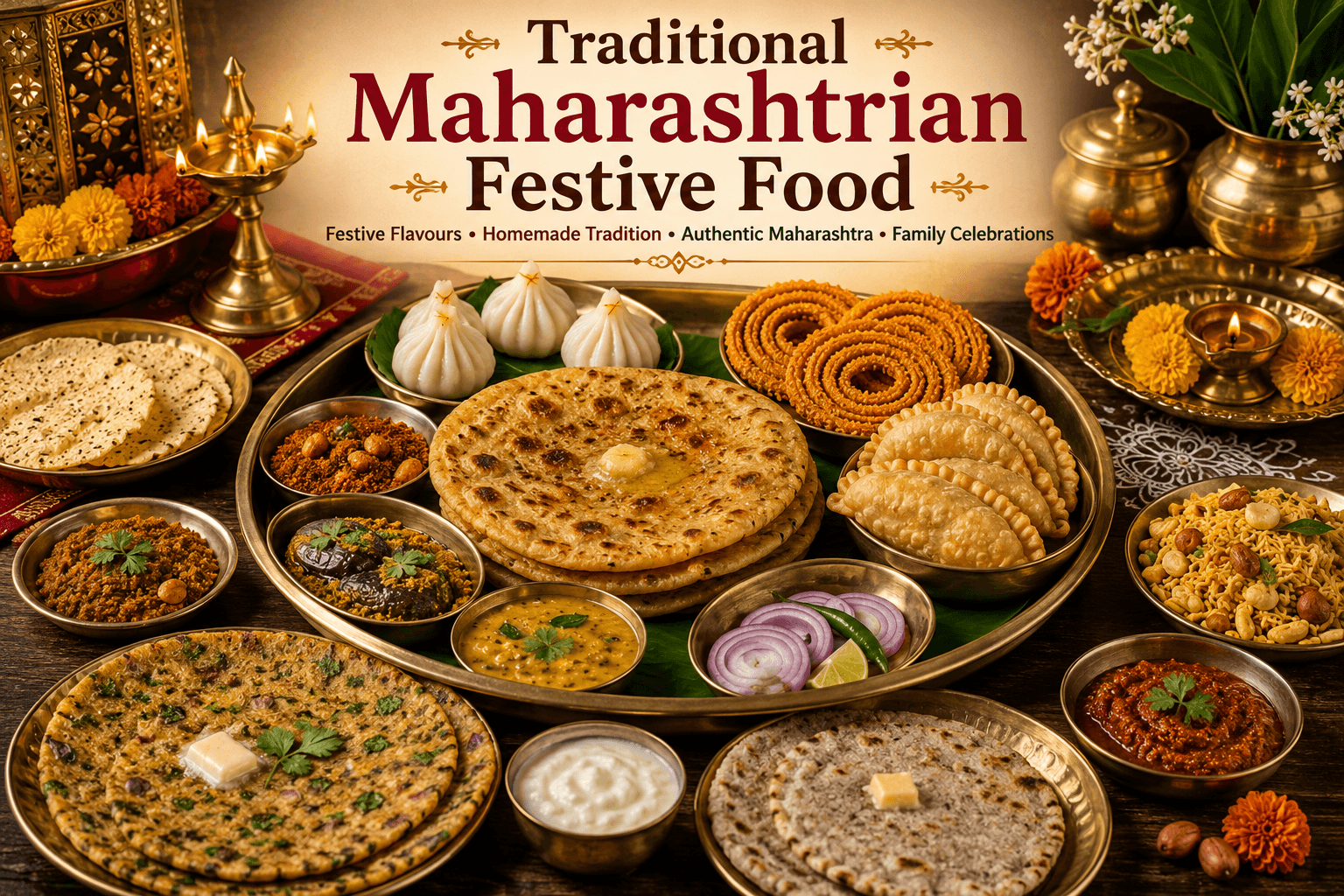
Traditional Maharashtrian Foods for Festivals and Special Occasions
Authentic Taste • Festive Tradition • Homemade Goodness • Maharashtrian Heritage
Maharashtra is known for its rich culture, vibrant festivals and diverse food traditions. In Maharashtrian homes, food is much more than something to eat—it is an important part of celebration, family traditions and cultural identity.
From the sweetness of Puran Poli during festive occasions to crispy Chakli and Karanji prepared for Diwali, every traditional Maharashtrian dish has a story behind it.
Festivals bring families together, and traditional food makes these moments even more memorable.
Today, as people increasingly search for authentic Maharashtrian food, homemade traditional foods, regional Indian recipes and village-style food products, these recipes are finding their way back into modern kitchens.
Whether it is Ganesh Chaturthi, Diwali, Makar Sankranti, Gudi Padwa, Raksha Bandhan, Navratri or a family celebration, Maharashtrian cuisine offers something special for every occasion.
Let's explore some of the most popular traditional Maharashtrian foods for festivals and special occasions.
Why Food Is So Important in Maharashtrian Festivals
Maharashtrian festivals are closely connected with food traditions.
Different festivals have different dishes, ingredients and preparation methods.
Food is often prepared at home and shared with:
Family members
Friends
Neighbours
Guests
Relatives
Traditional recipes are also passed from grandparents to parents and then to younger generations.
This makes festive food an important part of preserving Maharashtrian food culture.
The recipes may vary from one region to another, but the emotion remains the same:
घरचा स्वाद + परंपरा + कुटुंब + सणाचा आनंद
1. Puran Poli – The Star of Maharashtrian Festive Food
No discussion about traditional Maharashtrian festive food is complete without Puran Poli.
Puran Poli is a sweet flatbread prepared using a filling made primarily from cooked chana dal and jaggery, along with spices such as cardamom.
It is especially associated with festivals and special occasions.
It is commonly enjoyed during:
Holi
Gudi Padwa
Religious celebrations
Family functions
Festive meals
Traditionally, Puran Poli is served with ghee, milk or a traditional accompaniment.
Its soft texture, sweet filling and aromatic spices make it one of Maharashtra's most loved festive dishes.
Why Puran Poli Is Special
Puran Poli represents the traditional Maharashtrian idea of preparing something special for guests and family.
It requires time, patience and skill—making it much more than an ordinary sweet dish.
2. Modak – A Favourite for Ganesh Chaturthi
Modak is one of the most iconic Maharashtrian festival foods.
It is strongly associated with Ganesh Chaturthi and is traditionally offered as a favourite food during the festival.
Traditional steamed Ukadiche Modak generally consists of:
Rice flour outer covering
Coconut
Jaggery
Cardamom
The combination of soft rice flour and sweet coconut-jaggery filling creates a distinctive festive flavour.
Today, many varieties of Modak are available, but Ukadiche Modak remains particularly important in Maharashtrian food culture.
3. Chakli – A Diwali Favourite
When Diwali arrives, Maharashtrian kitchens become busy preparing a variety of traditional snacks.
Chakli is one of the most popular.
It is a crispy, spiral-shaped savoury snack traditionally prepared using a flour mixture and spices.
Chakli is commonly served:
During Diwali
With tea
To guests
As a festive snack
In traditional फराळ थाळी
Homemade Chakli is especially popular because families often have their own recipes and preferred spice combinations.
The crunch and savoury flavour make Chakli a classic part of Maharashtrian Diwali Faral.
4. Karanji – Traditional Sweet for Diwali
Another famous Maharashtrian Diwali snack is Karanji.
Karanji is a crescent-shaped sweet pastry traditionally filled with a mixture that may include:
Coconut
Sugar
Poppy seeds
Cardamom
Dry fruits
It is deep-fried until crisp.
Karanji is closely associated with Diwali Faral and is often prepared alongside Chakli, Ladoo, Shankarpali and other festive snacks.
Its crisp outer layer and sweet aromatic filling make it a favourite during celebrations.
5. Shankarpali – Simple, Crispy and Festive
Shankarpali is another traditional Maharashtrian snack commonly prepared during Diwali.
It is made by preparing dough, cutting it into small pieces and frying or baking them until crisp.
Depending on the recipe, Shankarpali can be:
Sweet
Slightly savoury
Crisp
Soft inside
Homemade Shankarpali is particularly popular because it is easy to share with family members and guests.
6. Anarsa – A Traditional Festive Sweet
Anarsa is a traditional Maharashtrian sweet prepared mainly from rice and jaggery.
It requires careful preparation and is traditionally associated with festivals and special occasions.
Anarsa is valued because it represents the skill involved in traditional Indian sweet-making.
The preparation can take time, which is one reason why traditionally prepared Anarsa has a special place in festive food culture.
7. Besan Ladoo – A Popular Celebration Sweet
Besan Ladoo is another familiar sweet found during Maharashtrian festivals and family celebrations.
Made primarily with:
Gram flour
Ghee
Sugar
Cardamom
it is commonly prepared for:
Diwali
Religious occasions
Family functions
Festive gatherings
The aroma of roasted besan and ghee is strongly associated with homemade festive sweets.
8. Thalipeeth – Traditional Maharashtrian Comfort Food
Not every festive dish has to be sweet.
Thalipeeth is a traditional Maharashtrian savoury flatbread prepared using a mixture of grains, pulses, spices and other ingredients depending on the regional recipe.
It can be served with:
Curd
White butter
Pickle
Chutney
Thalipeeth is suitable for breakfast, lunch, dinner or special family meals.
Its connection with traditional grains also makes it relevant to today's growing interest in millet foods and traditional Indian recipes.
9. Dhapate – A Traditional Maharashtrian Favourite
Dhapate is another traditional Maharashtrian flatbread that deserves a place on the modern festive table.
Depending on the regional recipe, Dhapate can contain ingredients such as:
Jowar
Wheat
Chickpea
Moong dal
Spices
Vegetables or herbs
It is generally served with:
Shenga Chutney
Curd
Pickle
Homemade butter
Dhapate represents the practical wisdom of traditional Maharashtrian kitchens—combining grains and pulses into a filling regional meal.
Today, ready-to-use Dhapate Pith is making this traditional food easier for busy families to prepare.
10. Solapuri Shenga Chutney – The Perfect Maharashtrian Accompaniment
A traditional Maharashtrian meal often feels incomplete without a good chutney.
Shenga Chutney, especially the popular Solapuri style, is prepared primarily using roasted peanuts along with spices and other ingredients depending on the recipe.
It pairs wonderfully with:
Jowar Bhakri
Dhapate
Thalipeeth
Pithla
Rice
Bhaji
Its spicy, nutty and roasted flavour can instantly enhance a simple meal.
For festive gatherings, Shenga Chutney is an easy way to bring traditional Maharashtrian flavour to the dining table.
11. Bharli Vangi – A Festive Maharashtrian Vegetable Dish
Bharli Vangi is a classic Maharashtrian preparation made using small brinjals stuffed with a flavourful mixture.
Traditional versions commonly use ingredients such as:
Ground peanuts
Coconut
Maharashtrian spices
Goda Masala or regional spice blends
Bharli Vangi is usually served with Bhakri or rice.
Its rich masala and traditional preparation make it a popular choice for family meals and special occasions.
12. Pithla-Bhakri – The Taste of Rural Maharashtra
If you want to experience authentic Maharashtrian village food, Pithla-Bhakri is one of the most iconic combinations.
Pithla is prepared primarily using gram flour, spices and other ingredients, while Bhakri can be prepared using:
Jowar
Bajra
Rice
Other regional grains
It is simple, filling and deeply connected with rural Maharashtra.
For special family meals, serving Pithla-Bhakri with Shenga Chutney, pickle and onion creates an authentic village-style Maharashtrian dining experience.
13. Traditional Maharashtrian Pickles
Festive meals often include a small serving of homemade pickle.
Popular varieties include:
Mango Pickle
Lemon Pickle
Chilli Pickle
Mixed Pickle
Traditional pickles add:
Tanginess + Spice + Aroma + Flavour
to an otherwise simple meal.
Homemade pickles are also strongly connected with seasonal food traditions in Maharashtra.
14. Traditional Papad and Snacks
Papad is another popular addition to special meals.
Maharashtrian households enjoy different varieties made using ingredients such as:
Udid dal
Moong dal
Rice
Sabudana
Potato
Bajra
Ragi
Papad can be roasted or fried and served alongside meals.
Traditional snacks such as Shev, Chakli, Batata Chips and other regional snacks are also popular during family gatherings and festive occasions.
Maharashtrian Festival Foods by Occasion
Festival / Occasion | Traditional Foods |
|---|---|
Ganesh Chaturthi | Modak, Puran Poli, traditional snacks |
Diwali | Chakli, Karanji, Shankarpali, Ladoo, Chivda |
Gudi Padwa | Puran Poli, Shrikhand-Puri, traditional festive meals |
Holi | Puran Poli, traditional sweets |
Makar Sankranti | Tilgul, Bhakri, traditional seasonal foods |
Raksha Bandhan | Puran Poli, sweets, homemade snacks |
Family Functions | Pithla-Bhakri, Bharli Vangi, Thalipeeth, sweets |
Religious Occasions | Puran Poli, Modak, traditional Prasad |
Why Homemade Maharashtrian Food Is Becoming Popular Again
The growing interest in traditional Indian food is not simply nostalgia.
Modern consumers are increasingly looking for:
Authentic flavours
Regional recipes
Homemade food
Traditional ingredients
Local products
Less processed food options
Convenient traditional foods
At the same time, busy lifestyles have created demand for products that make traditional cooking easier.
This has created an exciting opportunity for traditional food brands and rural food entrepreneurs.
Traditional Food Meets Modern Convenience
One of the biggest changes in today's food market is the combination of traditional recipes with modern packaging and convenience.
Products such as:
Ready-to-make Dhapate Pith
Traditional Masalas
Homemade Pickles
Shenga Chutney
Papad
Traditional Snacks
Cold-Pressed Oils
allow consumers to enjoy familiar regional flavours without preparing everything from scratch.
This is helping traditional Indian foods become relevant to modern families.
Gawakadcha.com and the Revival of Maharashtrian Food
Gawakadcha.com brings together traditional village food products and regional specialities while creating opportunities for rural producers.
The platform focuses on products connected with:
Traditional recipes
Rural food culture
Homemade preparation
Regional flavours
Local entrepreneurship
From Dhapate Pith and Shenga Chutney to Pickles, Masalas, Papad and traditional snacks, these products help bring the taste of Maharashtra into modern homes.
The idea is simple:
गावाकडची चव… आता एका क्लिकवर!
Frequently Asked Questions
What are the most popular traditional Maharashtrian festival foods?
Popular festive foods include Puran Poli, Modak, Chakli, Karanji, Shankarpali, Anarsa, Ladoo and several regional savoury dishes.
What is a traditional Maharashtrian Diwali Faral?
Maharashtrian Diwali Faral commonly includes snacks and sweets such as Chakli, Karanji, Shankarpali, Ladoo, Chivda and other homemade preparations.
What food is traditionally prepared for Ganesh Chaturthi in Maharashtra?
Ukadiche Modak is one of the most iconic foods associated with Ganesh Chaturthi in Maharashtra.
What are some traditional Maharashtrian village foods?
Dhapate, Jowar Bhakri, Pithla, Thalipeeth, Shenga Chutney, Bharli Vangi and traditional pickles are popular examples.
Where can I buy traditional Maharashtrian food online?
Traditional Maharashtrian products such as Masalas, Pickles, Papad, Shenga Chutney and ready-to-make foods can be explored through online village-product marketplaces such as Gawakadcha.com.
Conclusion
Traditional Maharashtrian food is an important part of Maharashtra's cultural heritage.
From Puran Poli and Modak to Chakli, Karanji, Dhapate, Thalipeeth, Bhakri, Pithla and Shenga Chutney, these foods bring together generations around the same dining table.
What makes these dishes special is not only their taste.
It is the tradition, memories, regional ingredients and stories behind them.
As more people search for authentic Indian food and homemade regional products, traditional Maharashtrian cuisine is finding a new place in modern kitchens.
The future of traditional food does not have to mean leaving old recipes behind.
It can mean taking those recipes forward.
Because every traditional dish carries a piece of Maharashtra—and every festive meal is an opportunity to keep that tradition alive.