
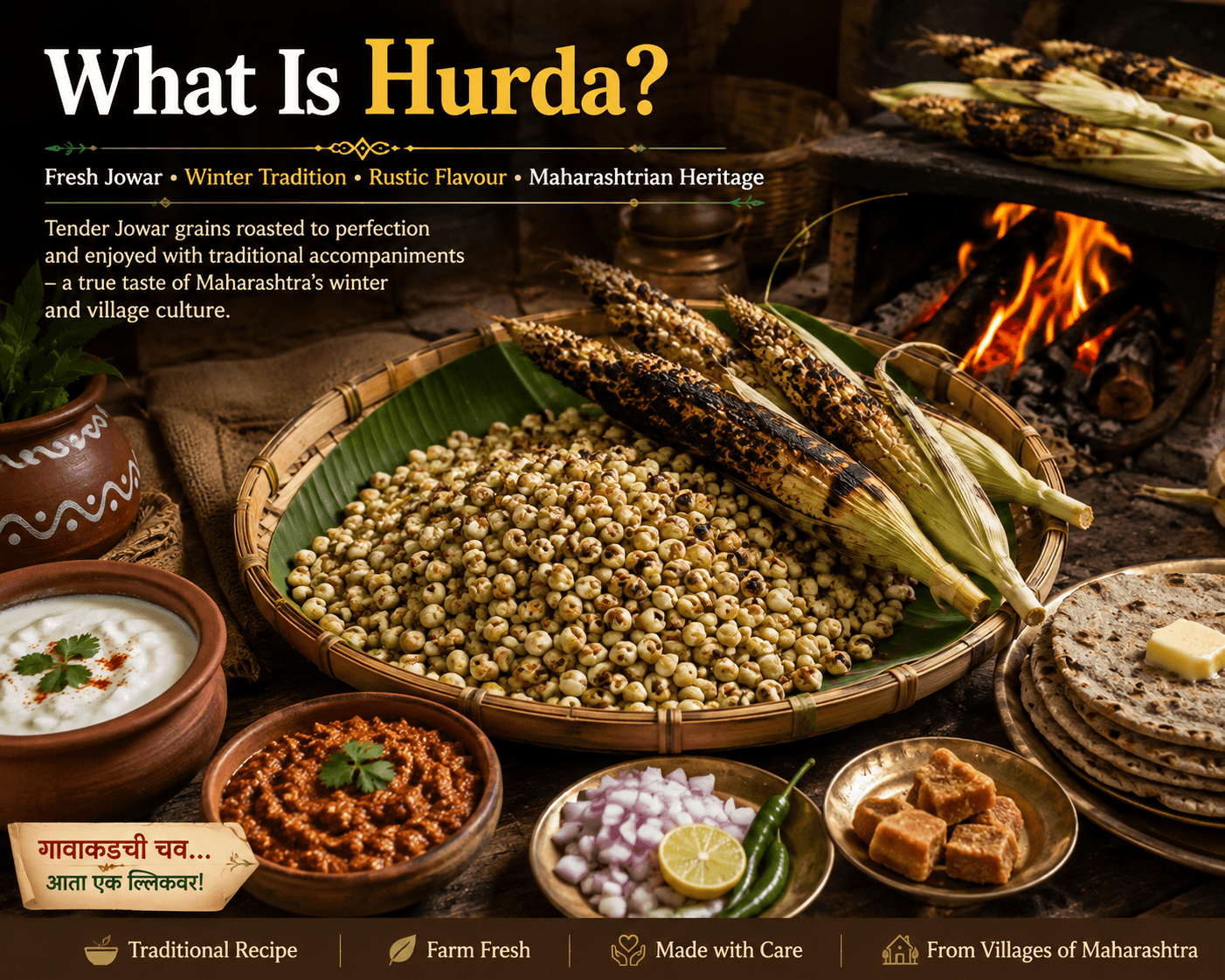
What is Hurda? Maharashtra's Famous Winter Food Tradition Explained
Fresh Jowar • Winter Tradition • Rustic Flavour • Maharashtrian Heritage
If you have ever spent winter in rural Maharashtra, you may have heard people talking about Hurda. For many Maharashtrian families, Hurda is not simply a seasonal food—it is a winter tradition, a social experience and a celebration of fresh Jowar.
Every winter, when tender Jowar grains become available, families and friends come together to enjoy freshly roasted Hurda with traditional accompaniments such as Shenga Chutney, curd, jaggery and other regional flavours.
Today, Hurda is becoming popular beyond villages as more people discover traditional Maharashtrian food, authentic village food and regional Indian food traditions.
But what exactly is Hurda? How is it prepared? Why is it eaten mainly in winter? And why has this traditional food become so popular?
Let's explore the story behind Maharashtra's famous winter food tradition.
What Is Hurda?
Hurda is made from tender, immature Jowar (sorghum) grains harvested before the grains fully mature.
Unlike mature Jowar grain, which is dried and processed into flour, Hurda is enjoyed while the grain is still young and soft.
Traditionally, fresh Jowar ears are roasted over fire or embers. The tender grains are then separated and eaten warm.
The result is a unique combination of:
Mild sweetness
Soft texture
Roasted aroma
Fresh grain flavour
Rustic smoky character
This makes Hurda very different from ordinary Jowar flour or mature Jowar grains.
In simple words:
Hurda = Fresh, tender Jowar grains roasted and enjoyed during winter.
Why Is Hurda a Winter Food?
Hurda is strongly associated with the winter season in Maharashtra because tender Jowar becomes available during this period.
Fresh Hurda has a relatively short seasonal window.
This makes it different from foods that can be purchased throughout the year.
When the season arrives, people look forward to Hurda gatherings and farm visits.
The seasonal nature of Hurda is an important part of its charm.
It creates a feeling of:
“The Hurda season has arrived!”
For many Maharashtrian families, this is one of the special signs of winter.
How Is Traditional Hurda Prepared?
Traditional Hurda preparation is simple but deeply connected with rural farming culture.
Step 1: Fresh Jowar Is Harvested
Tender Jowar ears are selected while the grains are still immature.
Step 2: The Jowar Is Roasted
Traditionally, the ears are roasted over a wood fire or traditional heat source.
This gives the grains their characteristic roasted aroma.
Step 3: The Tender Grains Are Separated
After roasting, the grains are removed from the ears.
Step 4: Hurda Is Served Fresh
The warm grains are generally enjoyed immediately with traditional accompaniments.
The simplicity of the process is part of what makes Hurda special.
What Does Hurda Taste Like?
If you have never eaten Hurda before, its flavour can be difficult to compare with ordinary foods.
Fresh Hurda generally has a:
Soft + Mildly Sweet + Roasted + Fresh Grain Flavour
The exact taste can vary depending on:
Jowar variety
Harvest stage
Freshness
Roasting method
Cooking conditions
Unlike mature Jowar, which is commonly used to make Bhakri, tender Hurda has a softer texture and distinctive seasonal flavour.
The roasting process adds another layer of aroma.
Hurda and Maharashtrian Village Culture
Hurda is deeply connected with rural Maharashtra.
Traditionally, Hurda was enjoyed around farms during the winter harvest season.
Families and friends would gather together, roast fresh Jowar and enjoy it while sitting together outdoors.
This created an experience that was about much more than food.
It was about:
Farming
Friendship
Family
Fresh harvest
Rural life
Seasonal traditions
This is why Hurda is often remembered as an experience rather than simply a dish.
What Do People Eat with Hurda?
Hurda becomes even more enjoyable when served with traditional accompaniments.
Popular combinations include:
1. Shenga Chutney
Roasted peanut-based Shenga Chutney adds a spicy and nutty flavour that contrasts beautifully with the mild taste of Hurda.
2. Curd
Fresh curd provides a cool and creamy accompaniment.
3. Jaggery
Jaggery can complement the naturally mild sweetness of tender Jowar.
4. Traditional Chutneys
Regional chutneys can add spice and flavour to freshly roasted Hurda.
5. Other Maharashtrian Accompaniments
Depending on the region and family tradition, Hurda gatherings may include additional local foods and snacks.
One of the most popular combinations is:
Fresh Hurda + Shenga Chutney + Curd
Hurda vs Jowar: What Is the Difference?
Many people confuse Hurda with ordinary Jowar.
They are related, but they are not the same food.
Hurda | Mature Jowar |
|---|---|
Made from tender grains | Made from mature grains |
Seasonal | Available throughout the year |
Soft texture | Harder grain |
Roasted fresh | Often dried and processed |
Mainly associated with winter | Used year-round |
Popular as a seasonal food experience | Used for flour, Bhakri and other foods |
The biggest difference is the stage at which the Jowar is harvested and consumed.
Is Hurda Healthy?
Hurda is made from Jowar, a traditional cereal grain.
Jowar is widely valued as part of a diverse Indian diet and provides nutrients including carbohydrates, protein, fibre and several micronutrients.
However, the nutritional profile of Hurda can differ from that of fully mature and processed Jowar products.
The overall nutritional value of a Hurda meal also depends on what it is served with.
For example, adding large quantities of butter, ghee, jaggery or other calorie-dense accompaniments changes the overall nutritional profile of the meal.
So Hurda can be enjoyed as part of a balanced and varied diet, rather than being treated as a miracle health food.
Why Is Hurda Becoming Popular Again?
Hurda was traditionally a rural seasonal food.
Today, it is attracting attention from urban consumers as well.
There are several reasons.
1. Interest in Traditional Indian Foods
People are increasingly exploring forgotten and regional Indian foods.
2. Growing Interest in Millets
Jowar and other traditional grains have become more visible in modern food conversations.
3. Farm-to-Table Experiences
Urban families enjoy visiting farms and experiencing traditional food preparation.
4. Food Tourism
Traditional foods are increasingly becoming part of rural tourism and culinary experiences.
5. Nostalgia
People who grew up eating Hurda often want to recreate the experience after moving to cities.
This has helped transform Hurda from a local seasonal tradition into a food experience known across Maharashtra and beyond.
Hurda Parties: A Unique Maharashtrian Winter Experience
One of the most interesting aspects of Hurda culture is the Hurda Party.
During winter, groups of friends and families often visit farms or rural locations to enjoy fresh Hurda.
A traditional Hurda gathering can include:
Freshly roasted Hurda
Shenga Chutney
Curd
Jaggery
Bhakri
Pithla
Pickles
Other Maharashtrian snacks
People sit together, eat fresh food and enjoy the rural surroundings.
The experience combines:
Food + Farming + Nature + Community
This is one reason Hurda remains culturally important.
Hurda and Maharashtra's Agricultural Heritage
Hurda also represents Maharashtra's connection with agriculture.
Jowar has historically been an important crop in many parts of Maharashtra, especially in regions where dryland farming is common.
Traditional foods developed around locally available crops.
Instead of transporting ingredients from distant places, rural communities historically built their diets around what farmers could grow locally.
Hurda is a beautiful example of this relationship:
Local Crop → Seasonal Harvest → Traditional Preparation → Community Food
Hurda in Modern Maharashtrian Kitchens
Today, people living in cities may not have access to fresh Jowar ears during the short Hurda season.
This has created interest in food products inspired by Hurda and traditional Jowar recipes.
One example is Hurda Dhapate Pith, which brings the flavour and idea of traditional Hurda-based Maharashtrian food into a convenient ready-to-use format.
This reflects an important change in Indian food culture.
People want traditional flavours—but they also want convenience.
Therefore:
Traditional Recipe + Modern Packaging = Easier Access
Why Hurda Is More Than Just Food
Hurda represents something that modern food often struggles to provide: a sense of place.
When people eat Hurda, they are not only experiencing a grain.
They are experiencing memories of:
Winter afternoons
Village farms
Wood fires
Family gatherings
Fresh harvests
Maharashtrian traditions
This emotional connection is one of the strongest reasons traditional foods continue to survive.
How Hurda Supports Local Food Culture
Traditional seasonal foods create demand for local agricultural products.
When consumers appreciate regional foods, they also become more interested in:
Local grains
Farmers
Traditional recipes
Rural food businesses
Regional food producers
This can help keep traditional food knowledge relevant for younger generations.
Preserving a food tradition does not necessarily mean keeping it unchanged.
It means making sure the tradition continues to have a place in modern life.
Gawakadcha.com and Traditional Maharashtrian Food
Gawakadcha.com focuses on bringing traditional and village-inspired food products closer to modern customers.
Products such as:
Hurda Dhapate Pith
Maharashtrian Masalas
Shenga Chutney
Traditional Pickles
Papad
Traditional Snacks
Millet Products
help customers discover flavours associated with Maharashtra's rural food culture.
The idea is to make traditional products easier to discover and purchase while creating opportunities for rural producers.
गावाकडची चव… आता एका क्लिकवर!
Frequently Asked Questions About Hurda
What is Hurda in Maharashtra?
Hurda is a traditional Maharashtrian seasonal food made from tender, immature Jowar grains, generally roasted and eaten fresh during winter.
When is Hurda eaten?
Hurda is mainly enjoyed during the winter season when tender Jowar is available.
What is Hurda made from?
Hurda is made from young, tender grains of Jowar (sorghum).
What do you eat with Hurda?
Hurda is commonly enjoyed with Shenga Chutney, curd, jaggery and other traditional Maharashtrian accompaniments.
Is Hurda the same as Jowar?
No. Hurda refers to tender, immature Jowar grains consumed fresh, while mature Jowar is commonly dried and processed into flour or other foods.
What is a Hurda Party?
A Hurda Party is a seasonal gathering, often held at a farm, where people enjoy freshly roasted Hurda along with traditional Maharashtrian foods and accompaniments.
Conclusion
Hurda is one of Maharashtra's most fascinating winter food traditions.
Made from tender Jowar grains and traditionally roasted over fire, it offers a flavour that is seasonal, rustic and distinctly Maharashtrian.
But Hurda is more than a food.
It represents:
Winter Harvest • Rural Maharashtra • Local Farming • Family • Friendship • Tradition
As interest in traditional Indian foods, millet-based foods, village food and regional Maharashtrian cuisine continues to grow, Hurda is finding new appreciation among modern consumers.
The tradition may have started around village farms, but its story continues today in urban kitchens, food experiences and modern food products.
Because sometimes, the best way to understand a region is not through a map or a history book.
It is through its food.
And in Maharashtra, winter tastes a little more special with Hurda