
Why Buying Village Products Matters
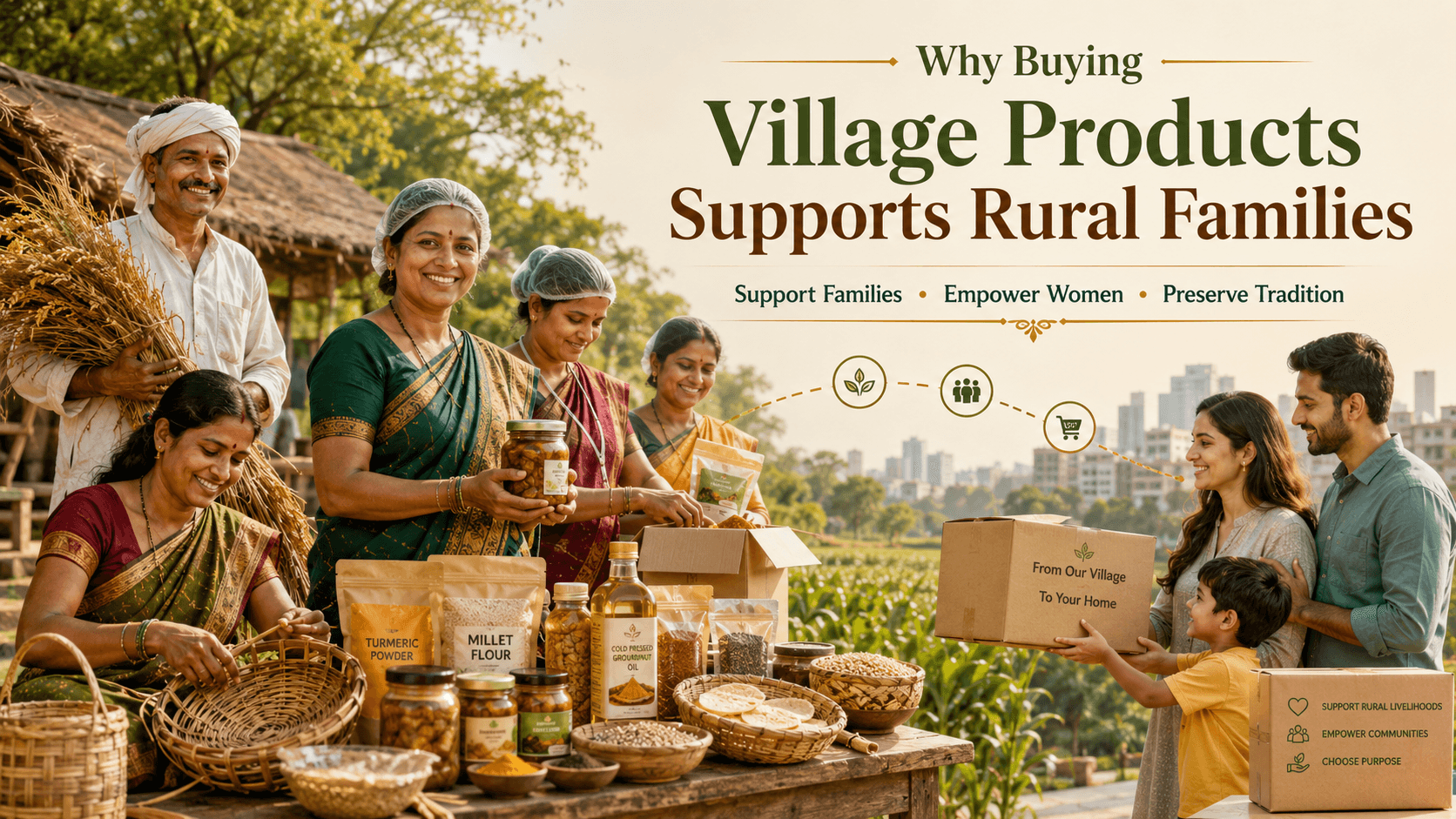
Every village product tells a story of skill, effort, and livelihood. A jar of pickle, a packet of masala, or a handmade basket may seem like a simple purchase, but for a rural family, it can mean income, dignity, and stability. When customers choose authentic village-made products, they help create a market for farmers, women entrepreneurs, artisans, and small household businesses.
This is especially important in a country where many families still depend on agriculture and home-based work. Village products do more than fill kitchen shelves or gift boxes. They help keep money circulating within rural communities, support traditional knowledge, and open the door to better opportunities for the next generation.
How Village Products Create Rural Income
The most direct benefit of buying village products is income generation. A family that makes papad or pickle at home may first produce only for personal use or for nearby neighbours. Once customers begin buying regularly, the same skill can become a small business. That income may be used for school fees, medical expenses, raw materials, packaging, savings, or farm inputs.
What matters most is consistency. One-time sales may help for a short period, but repeat customers allow a rural business to plan, grow, and improve. This is how a simple home kitchen or small workshop can gradually become a reliable source of livelihood.
Supporting Women Entrepreneurs in Villages
Many rural products are made by women who already have deep knowledge of cooking, preservation, and handmade production. They may know how to prepare masalas, chutneys, papad, millet snacks, or dried foods using methods passed down through generations. When these products reach a wider market, women gain more than income. They gain confidence, independence, and recognition for their work.
Buying from women-led rural businesses is not charity. It is support for real quality and real effort. When customers value the product for its taste, hygiene, and usefulness, women entrepreneurs can build businesses with dignity instead of dependence.
- Creates independent income
- Builds confidence and business skills
- Encourages digital and financial literacy
- Supports self-help group livelihoods
How Rural Products Help Farmers
Many village products begin with agricultural ingredients. Groundnuts, turmeric, coriander, chillies, mangoes, lemons, millet, pulses, and oilseeds often move through a local supply chain before becoming a finished product. When demand for village foods rises, the demand for these raw materials can also increase.
This connection matters because farmers often earn more when they can supply both raw produce and value-added products. Instead of selling only unprocessed crops, rural communities can create oil, flour, snacks, pickles, or spice mixes that bring in additional value. This helps agriculture and small enterprise grow together.
Value Addition Strengthens Rural Business
Selling raw ingredients and selling finished goods are very different. A farmer may earn one amount by selling groundnuts as a crop, but a different and often better value can be created when those same groundnuts are cleaned, processed, cold-pressed, bottled, and branded as oil. The same idea applies to spices, grains, fruits, and pulses.
Value addition gives rural families a chance to earn from their knowledge, not just their harvest. It also creates more local activity around sorting, processing, packaging, labelling, and delivery. That means more work for more people in the village.
Preserving Traditional Recipes and Skills
Village products are often tied to regional food culture. Recipes for masala, pickles, papad, flour mixes, and snacks are usually learned from parents, grandparents, or local community knowledge. If these products are not sold, younger generations may stop learning them because they do not see them as economically useful.
Commercial demand helps protect these traditions. When a traditional recipe becomes a product that customers want to buy, the skill becomes worth preserving. In this way, buying village products can help keep India’s food heritage alive while giving it a modern market.
Bridging the Rural and Urban Market Gap
One of the biggest challenges for rural producers is not quality but access. A family may create excellent food or handmade items, but only a few local buyers know about them. Meanwhile, customers in cities may be looking for authentic homemade products, regional flavours, or handmade goods with a story.
Online platforms can help bridge this gap by connecting village producers with customers across districts and states. This allows rural businesses to reach a much larger audience without losing their local identity. For customers, it means easier access to authentic Indian village products that are often hard to find in regular stores.
What Customers Should Look For
Supporting rural families works best when customers choose products carefully. A village-made item should still meet basic standards of quality, hygiene, and transparency. Buyers should check ingredients, shelf life, packaging, storage details, and relevant food information before purchasing.
- Clear ingredient list
- Proper packaging and labelling
- Fair pricing
- Reliable delivery and storage
- Honest product description
Buying village products should not mean ignoring quality. The best support is given when customers expect excellent products and rural businesses work to meet that expectation.
How Gawakadcha.com Helps
Gawakadcha.com helps customers discover authentic village products online while giving rural producers a way to reach new markets. It connects traditional foods, handmade goods, and regional specialties with people who value quality, heritage, and local livelihoods. This digital bridge can help turn a household skill into a sustainable business opportunity.
When a village product reaches a new customer, it carries more than taste or utility. It carries the work of a family, the knowledge of a community, and the possibility of stronger rural livelihoods. That is why every thoughtful purchase can make a real difference.
Conclusion
Buying village products is a practical way to support rural families. It can generate income, empower women, strengthen farmers, preserve traditional skills, and create local employment. More importantly, it helps rural producers participate in the modern economy without losing the identity that makes their products special.
When customers choose authentic products and reward quality, rural communities gain more than sales. They gain opportunity, confidence, and a stronger future.