
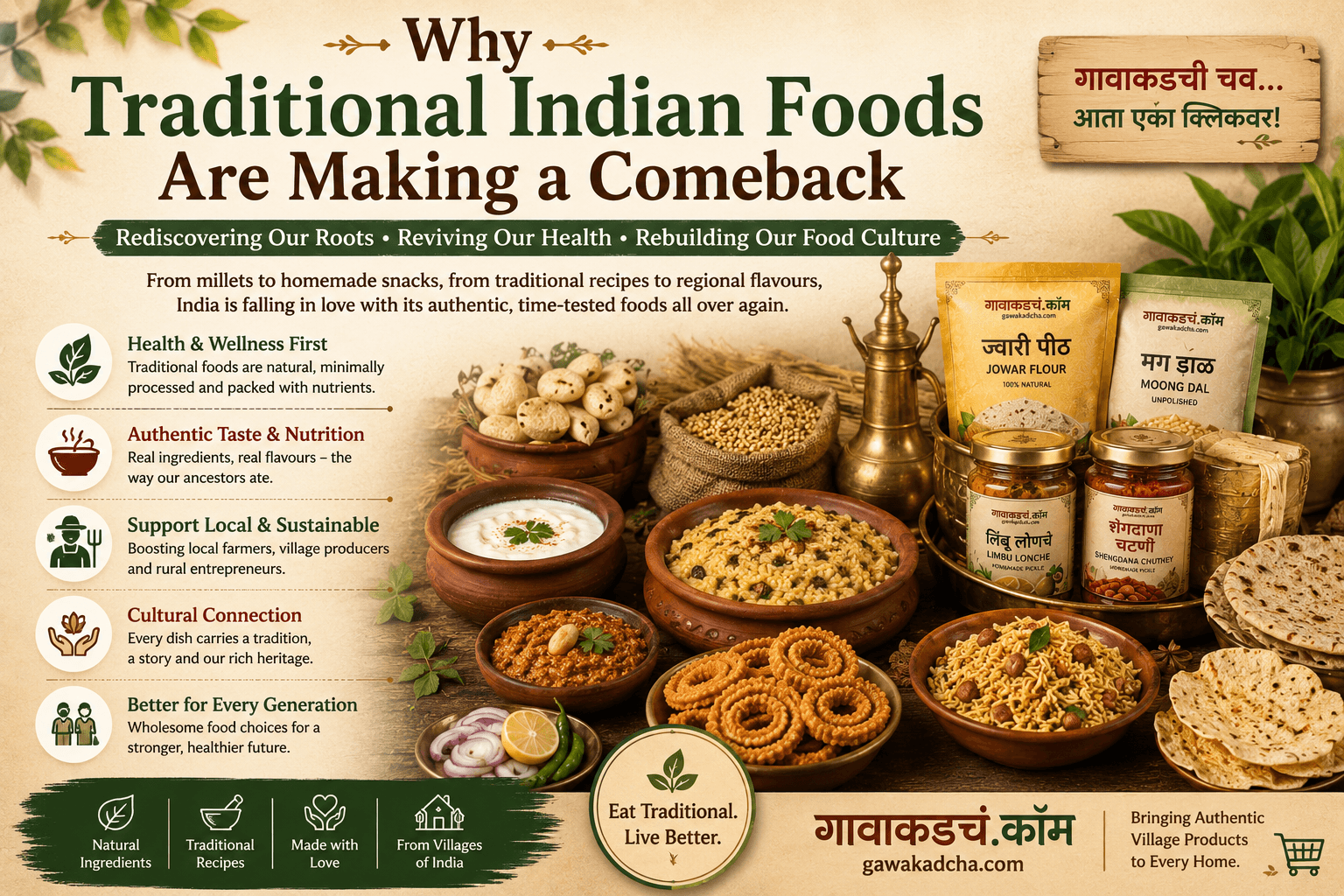
Why Traditional Indian Foods Are Making a Comeback
Authentic Taste • Nutrition • Heritage • Modern Lifestyle
For centuries, Indian kitchens have been built around traditional recipes, seasonal ingredients and regional cooking methods. Every state, community and village has contributed unique food traditions that represent India's rich culinary diversity.
From Maharashtrian Dhapate and Thalipeeth to South Indian Millets, Punjabi Pickles, Gujarati Snacks, Rajasthani Bajra Recipes and Homemade Masalas, traditional Indian foods have always been deeply connected with culture and local agriculture.
However, with changing lifestyles, urbanisation and the rise of fast food, many traditional foods slowly moved away from everyday kitchens. Packaged foods, instant meals and highly processed products became more common because of convenience.
But today, a major shift is happening.
People are once again searching for:
Authentic Indian food
Homemade food products
Traditional village foods
Regional Indian recipes
Millet-based foods
Natural ingredients
Chemical-free products
Handmade snacks and spices
Traditional Indian foods are making a strong comeback—not just because of nostalgia, but because modern consumers are looking for better taste, healthier choices and a connection with their roots.
This growing movement represents a beautiful combination:
Ancient Food Wisdom + Modern Convenience
What Are Traditional Indian Foods?
Traditional Indian foods are recipes and food products that have been passed from one generation to another.
These foods are usually prepared using:
Locally available ingredients
Traditional cooking techniques
Regional spice combinations
Seasonal produce
Family recipes
Unlike standardized packaged foods, traditional foods often represent the identity of a particular region.
Examples of Traditional Indian Foods
Maharashtra
Dhapate
Thalipeeth
Bhakri
Pithla
Shenga Chutney
Kala Masala
Homemade Pickles
Papad
South India
Ragi Dosa
Millet Recipes
Homemade Pickles
Traditional Snacks
North India
Homemade Ghee
Bajra Roti
Regional Pickles
Traditional Spice Blends
Gujarat and Rajasthan
Thepla
Khakhra
Bajra Preparations
Traditional Namkeen
Every traditional food tells a story about the land, people and culture from where it originated.
1. Growing Demand for Authentic Taste
One of the biggest reasons behind the comeback of traditional Indian foods is the search for authentic flavour.
Today's consumers have access to thousands of food products, but many people feel that modern packaged foods often lack the taste and emotional connection of homemade meals.
Traditional foods offer:
Original regional flavours
Traditional spice combinations
Homemade-style preparation
Familiar childhood memories
For example:
A traditional Maharashtrian Kala Masala prepared with roasted spices creates a different flavour experience compared to a generic spice powder.
A homemade pickle prepared with traditional methods has a different taste compared to mass-produced alternatives.
The difference comes from:
Ingredients + Recipe + Preparation Method
This is why searches for:
Authentic Maharashtrian food
Homemade food online
Village style food
Traditional Indian recipes
are continuously increasing.
2. Health Awareness Is Changing Food Choices
Modern consumers are becoming more conscious about what they eat.
People are asking:
What ingredients are used?
Is the food highly processed?
Are artificial additives included?
Is it made using natural ingredients?
This awareness has increased interest in traditional foods because many traditional recipes naturally include:
Whole grains
Millets
Pulses
Natural spices
Seasonal ingredients
Traditional oils
Examples:
Millet Foods
Traditional grains like:
Jowar
Bajra
Ragi
are becoming popular again.
Unpolished Pulses
Traditional dals are gaining attention because consumers want less processed food options.
Cold-Pressed Oils
Traditional oil extraction methods are becoming popular among people looking for alternatives to heavily refined cooking oils.
The focus has changed from:
"Eat more"
to:
"Eat better quality food."
3. Revival of Millets and Ancient Grains
One of the strongest examples of traditional food revival is the comeback of millets.
For generations, Indian farmers cultivated:
Jowar
Bajra
Ragi
Foxtail Millet
Little Millet
These grains were an important part of rural Indian diets.
Over time, wheat and polished rice became dominant in many households.
Today, people are rediscovering millet foods because they represent:
Traditional Indian agriculture
Regional food culture
Nutritional diversity
Sustainable farming
Popular millet-based foods include:
Jowar Bhakri
Bajra Bhakri
Ragi Papad
Millet Cookies
Dhapate
Thalipeeth
Millets represent:
Traditional Farming + Modern Nutrition
4. People Want to Support Rural Entrepreneurs
The comeback of traditional foods is also creating opportunities for rural communities.
Today's customers increasingly want to know:
Who made this product?
Where does it come from?
Does my purchase support local producers?
Traditional food businesses support:
Rural women entrepreneurs
Self-help groups
Small farmers
Village manufacturers
Local artisans
A packet of homemade Papad or traditional Masala represents more than food.
It represents:
Farmer → Producer → Rural Business → Customer
When consumers buy local products, they help preserve traditional skills and create rural employment opportunities.
5. E-Commerce Is Bringing Village Foods to Cities
Earlier, authentic village products were available only in local markets.
Someone living in Mumbai, Pune, Bengaluru or Delhi could not easily access homemade products from rural Maharashtra.
E-commerce has changed this completely.
Today customers can buy:
Homemade Pickles
Regional Masalas
Papad
Traditional Snacks
Millet Products
Cold-Pressed Oils
from anywhere in India.
Platforms like Gawakadcha.com are helping connect rural producers with customers looking for authentic village products.
Technology is not replacing tradition.
It is helping tradition reach more people.
6. Younger Generation Is Rediscovering Indian Food Culture
A few years ago, many young consumers considered traditional foods old-fashioned.
Today, the perception is changing.
Young people are exploring:
Regional recipes
Traditional cooking videos
Village food experiences
Healthy snacks
Indian superfoods
Social media has played an important role in making regional Indian foods popular again.
Food creators and brands are introducing traditional recipes to a new generation.
The younger generation is not only consuming traditional foods—they are celebrating them.
7. Traditional Cooking Methods Are Becoming Valuable Again
Traditional Indian food is not only about ingredients.
The preparation process also creates uniqueness.
Examples:
Wooden Ghani Oil Extraction
Traditional oil extraction methods preserve the connection between seeds and natural processing.
Handmade Masalas
Roasting and grinding spices traditionally creates unique aroma and flavour.
Sun-Dried Pickles
Traditional pickle-making requires patience and seasonal preparation.
Handmade Papad
Handmade products preserve skills passed through generations.
Consumers are appreciating these traditional processes because they represent authenticity.
8. Regional Indian Cuisine Is Getting Global Attention
Indian food is not limited to popular dishes like Biryani and Butter Chicken.
The world is discovering India's regional diversity.
Maharashtra alone offers:
Misal
Puran Poli
Dhapate
Thalipeeth
Bharli Vangi
Kala Masala
Solapuri Shenga Chutney
Every region has unique flavours.
The growing popularity of regional cuisine shows that people are interested in discovering the real India through food.
9. Traditional Foods Create Emotional Connections
Food is connected with memories.
Traditional foods remind people of:
Childhood
Grandparents' recipes
Festivals
Village visits
Family gatherings
A homemade pickle can remind someone of their grandmother's kitchen.
A traditional snack can bring back memories of festivals.
This emotional connection makes traditional foods special.
Consumers are not only buying food.
They are buying memories and experiences.
10. Traditional Foods Are Becoming More Convenient
One challenge with traditional foods was preparation time.
Modern families love traditional taste but often have busy schedules.
Food businesses are solving this challenge by offering:
Ready-to-make flour mixes
Packaged homemade snacks
Traditional Masalas
Ready-to-use chutneys
Regional food products
For example:
Instead of spending hours preparing Dhapate flour, customers can use ready-made Dhapate Pith.
Instead of preparing multiple spices separately, customers can use authentic Maharashtrian Masalas.
This creates the perfect balance:
Traditional Taste + Modern Convenience
Traditional Indian Food vs Modern Packaged Food
Traditional Indian Food | Modern Packaged Food |
|---|---|
Regional recipes | Standardised flavours |
Local ingredients | Industrial processing |
Cultural connection | Convenience focused |
Traditional methods | Mass production |
Homemade taste | Long shelf-life focus |
Modern packaged foods have their own convenience, but traditional foods offer something unique—identity and authenticity.
Why Maharashtrian Traditional Foods Are Becoming Popular
Maharashtra has one of India's richest food cultures.
Popular traditional products include:
Dhapate Pith
Shenga Chutney
Homemade Pickles
Kala Masala
Kanda Lasoon Masala
Papad
Millet Products
These foods represent:
Rural Maharashtra
Traditional recipes
Local ingredients
Women's entrepreneurship
The demand for these products shows that regional food identity is becoming valuable again.
Gawakadcha.com: Bringing Authentic Village Products Online
Gawakadcha.com works towards connecting customers with authentic village products made by rural producers.
The platform brings together:
Traditional Maharashtrian Foods
Homemade Snacks
Regional Masalas
Pickles
Papad
Cold-Pressed Oils
Millet Products
Rural Food Products
The vision is simple:
Bring the authentic taste of villages to every home while supporting rural entrepreneurs.
Traditional food is not only about preserving the past.
It is about creating opportunities for the future.
Frequently Asked Questions
Why are traditional Indian foods becoming popular again?
Traditional foods are becoming popular because people are looking for authentic taste, healthier ingredients, regional recipes and locally made products.
Are traditional foods healthier than packaged foods?
Many traditional foods use natural ingredients and traditional preparation methods, but nutritional value depends on ingredients and preparation.
What are examples of Maharashtrian traditional foods?
Dhapate, Thalipeeth, Bhakri, Pithla, Kala Masala, Shenga Chutney, Pickles and Papad are popular examples.
Why should we buy local food products?
Buying local products supports farmers, rural entrepreneurs, women producers and traditional food makers.
Where can I buy authentic Indian village products online?
Customers can explore traditional Indian foods and village products through platforms like Gawakadcha.com.
Conclusion
The comeback of traditional Indian foods is not just a passing trend.
It represents a movement towards:
Authenticity • Nutrition • Culture • Sustainability • Rural Growth
People are rediscovering that traditional foods offer something special:
A connection with India's roots.
From Maharashtrian Dhapate and Kala Masala to homemade Pickles, Papad and Millet products, every traditional food carries a story.
With the help of technology and e-commerce, these forgotten flavours are reaching modern kitchens again.
Traditional Indian food is not returning because it belongs to the past. It is returning because it has value for the future.